


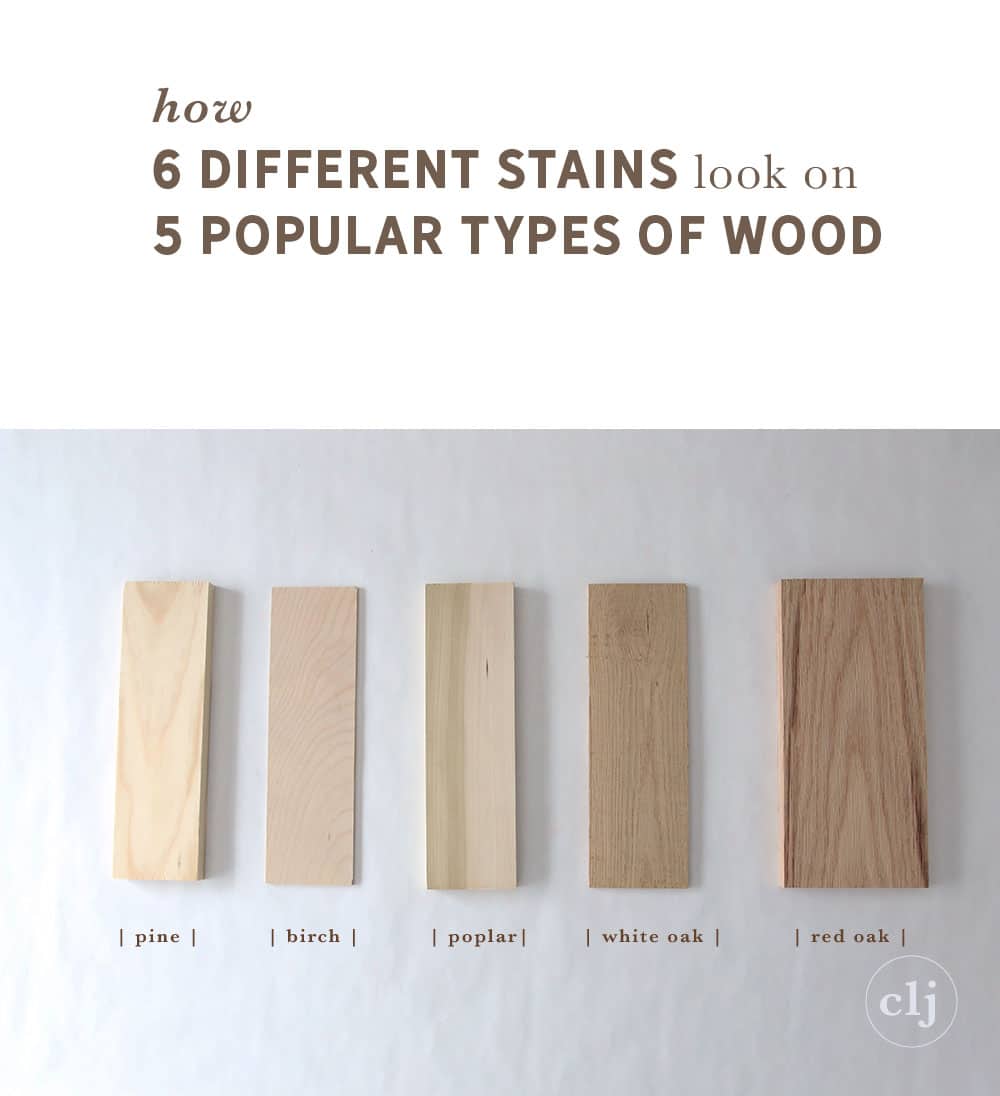
We’ve been wanting to do a wood/stain study for years now, and in my head, I wanted to do every type of wood with about 20 different stains each. But with limited resources (not to mention space), we settled on 5 popular species of wood commonly used by DIYers, with 6 different stains: 2 light, 2 medium, and 2 dark.
The wood types we chose are also vastly different, ranging from extremely soft (birch) to hard (red oak), with undertones all over the map. Not only does the hardness affect how a wood will accept stain (harder woods tend to accept stains better and more evenly), but also the natural color of the wood.
The ever-popular and inexpensive Pine has yellow undertones.
Birch has pink undertones.
Poplar has green undertones.
White Oak has the most neutral undertones.
And I bet you’ll never guess Red Oak’s undertones. (Hint: Red)
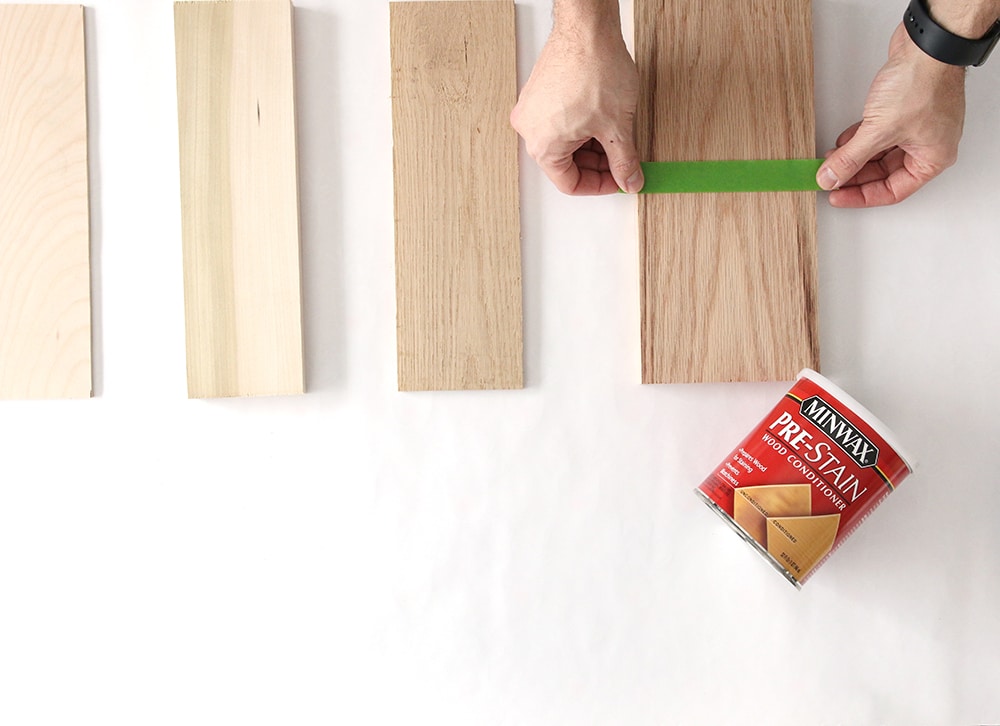
To give each wood the best chance at sporting stain, we started our study with Minwax’s Pre-Stain Wood Conditioner. Treating raw wood with conditioner helps prevent streaks and blotches by evening out the absorption of oil-based stains. It can be applied over any wood but is especially necessary when working with soft or porous woods like pine, alder, birch, and maple. You’ll see just how necessary it is in a minute, because of course, we took our observations one step further and only used conditioner on the bottom half of each piece of wood, so you can see the difference it makes.

We let the conditioner penetrate for 15 minutes and then wiped off any excess, removed the tape, and got to work applying 6 different stains to all five of our types of wood.

As a reminder, here are all the types of wood in their natural, raw state:

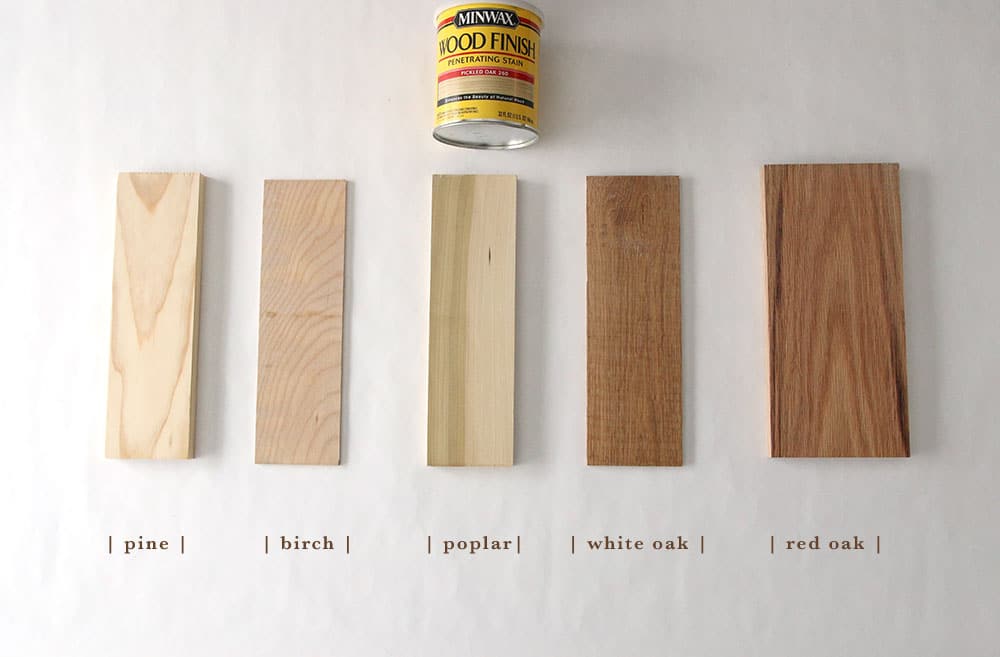
1. Minwax Pickled Oak. This stain added very little color to any of the boards (maybe slightly lighter with a tinge of green), but really brought out their natural color and grain. All of the wood types accepted the stain well, except the non-conditioned Birch side.
2. Minwax Simply White. Minwax recently came out with a Simply White stain, and I’m in love with it! It really softened each wood tone and color while not masking any grain–as semi-opaque stains do. You can see clearly the wood’s color undertones (yellow, pink, green, neutral, red), but they aren’t nearly as pronounced. Both of the oak species took on a sort of Cerused look I’m very into. The green that is generally very pronounced in Poplar turned into more of a warm gray. The unconditioned Birch side, again, struggled with accepting the stain, but you can also see the conditioned side of each board is slightly darker.

3. Minwax Golden Pecan. We chose to experiment with this stain color because of its mid-range tint with red undertones. The pine board looked the least natural with this stain. Poplar looked a little bit like watermelon. Birch did surprisingly well and the oaks were naturals. Naturals in a very red way.

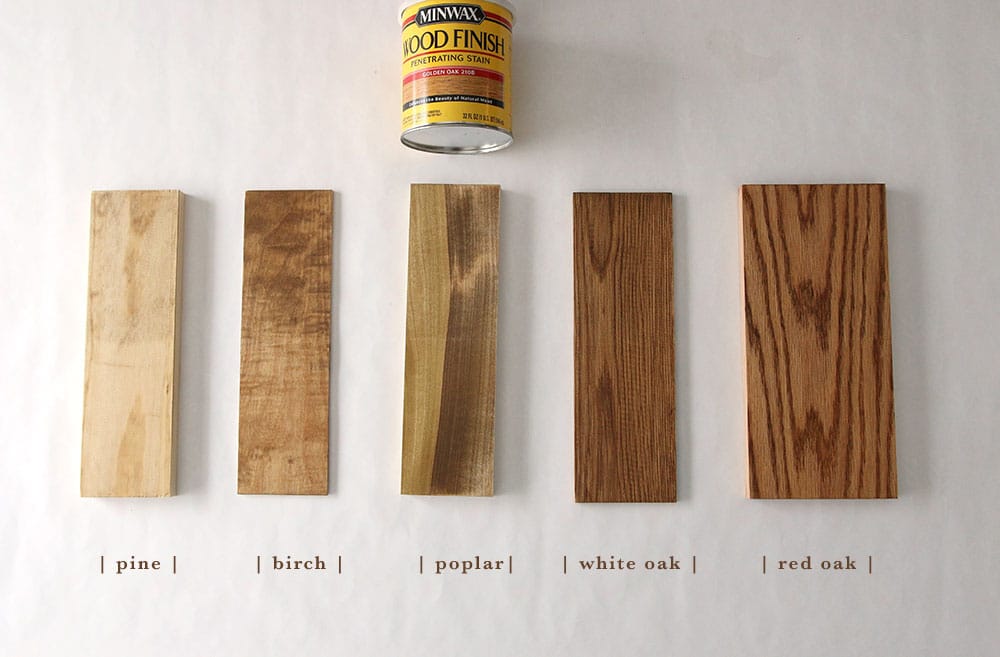
4. Minwax Golden Oak. This is another mid-range stain color, but with a more neutral base undertone. Instead of the wood grains picking up redness, you can see they all went a very neutral brown. There is very little difference between the conditioned and unconditioned white and red oaks, but the other three definitely benefited from the pre-stain conditioner.
5. Minwax Jacobean. The first of the dark stains we tried was also the more neutral in tone. It delivered rich, dark brown tones. Every wood species benefitted greatly from the conditioner with this stain. The pine turned more gray than anything.
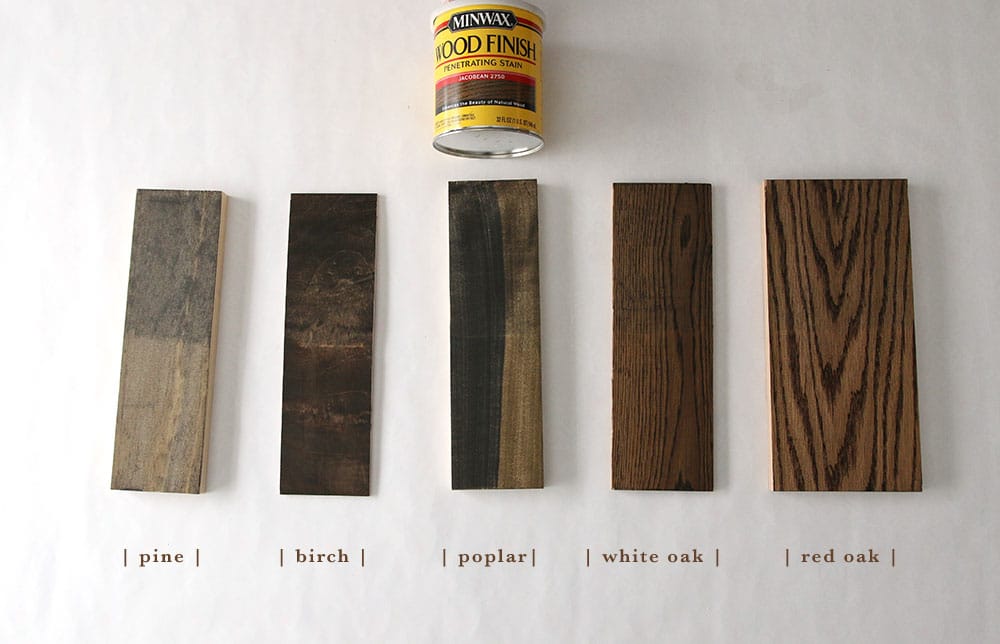
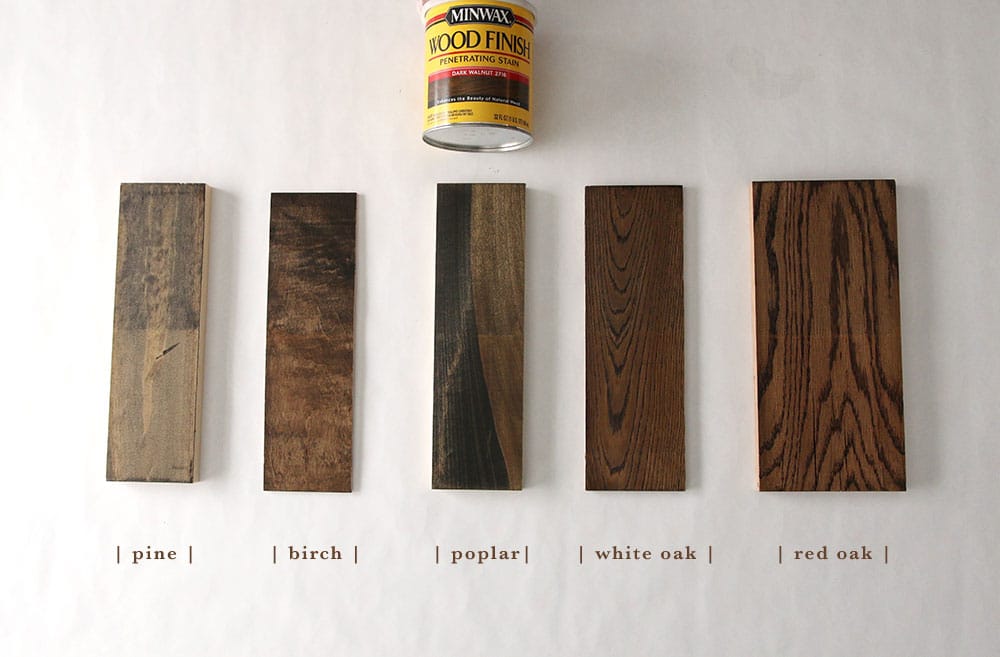
6. Minwax Dark Walnut. Last, is the redder of the two dark stains we experimented with. Although, no red came through with the pine at all. In fact, it looked almost pinky gray. The other woods took the stain well, with more redness coming out of the conditioned sides of the boards. The green in the Poplar board went to an almost black, like in the Jacobean stain–very stunning.
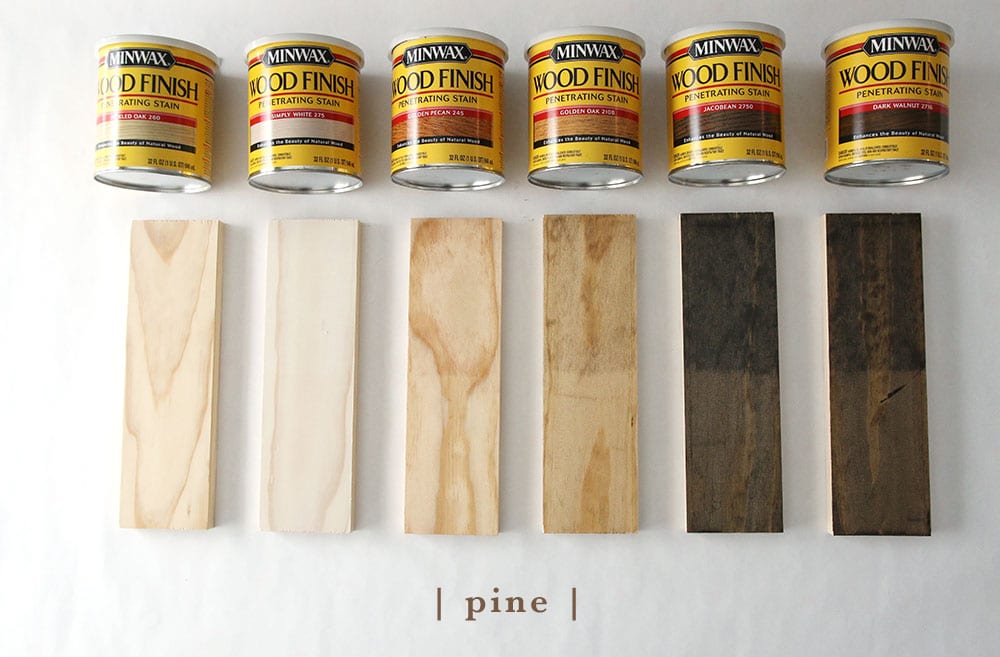
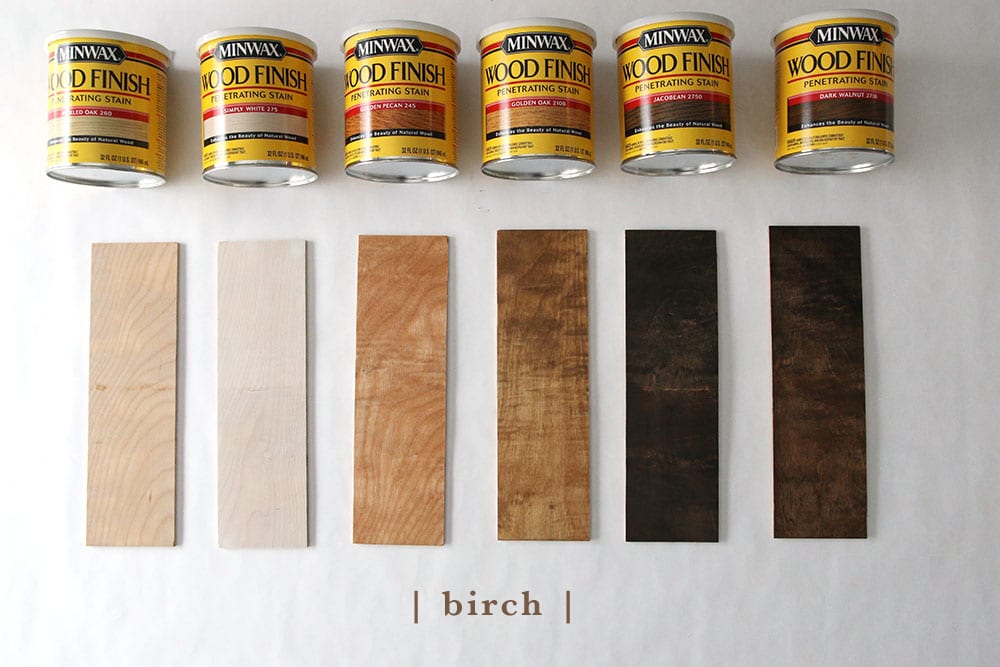
Lastly, we thought it would be beneficial to see all the same wood type with different stains in one picture. This will hopefully help you see how Pine, Birch, Poplar, White Oak and Red Oak’s undertones play with different stain undertones.
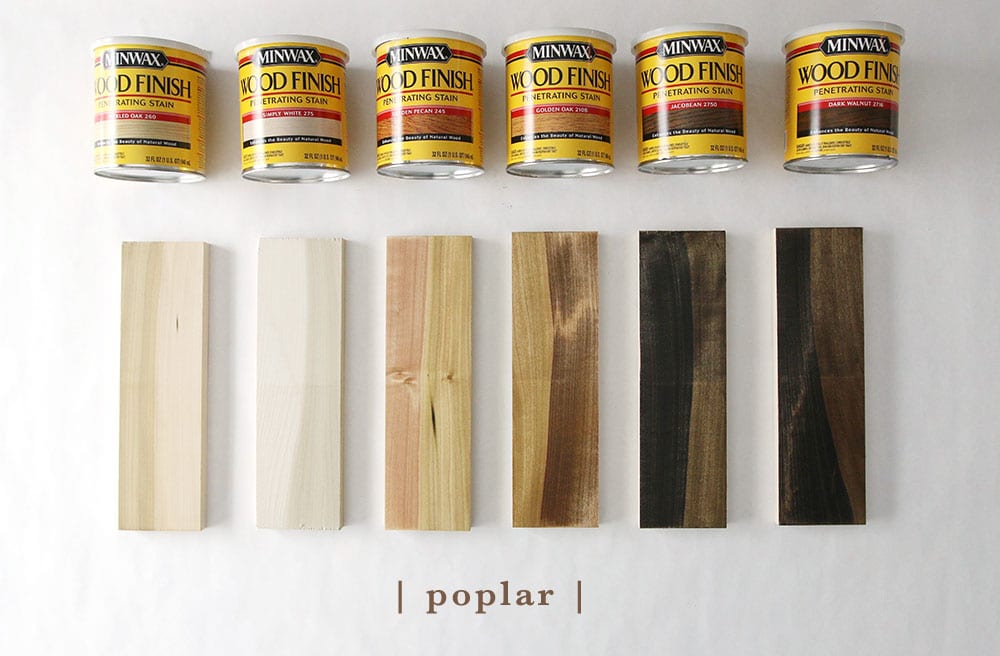
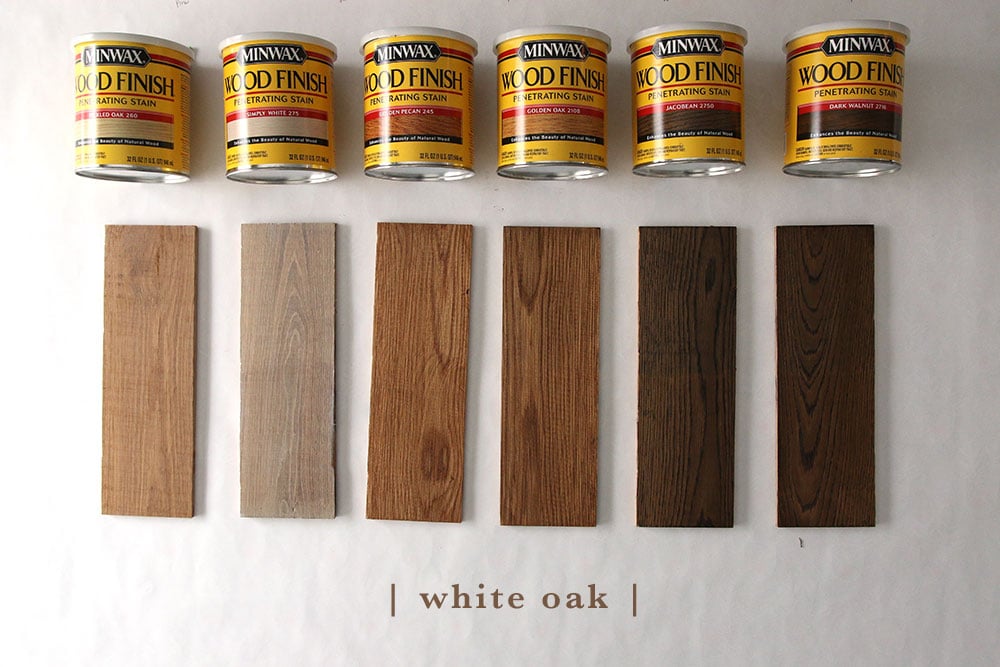

Like I said, I wish we could do 15 more of these! But I hope this is helpful. I think each wood species looked great with some stains and subpar with others.
I loved pine with the lights and darks, but not the medium stains.
Birch rocked Simply White and Golden Oak.
Poplar looked awesome in almost every one except the Golden Pecan.
White Oak can’t take a bad picture.
And Red Oak should probably stay away from things that add even more red to it (like Pickled Oak and Golden Pecan).
In my opinion, of course. What do you think!?





So helpful and thorough!
I just bought my first pre-owned table, and ready for my very first project.
I had no idea about the pre-conditioner. I didn’t even know it existed.
Thank you for saving me before I made my first mistake right out the gate.
Glad I stumbled upon this.
Really loved this blog post – it was very helpful to me. THANK YOU!
Any idea how dark walnut or jacobean would look on a trestle dining table made of clear alder wood? Great article I did not realize stain looks different on different woods! Amazing!
We didn’t test it, so can’t quite say!
This is a great article. Thank you for taking the time to put it together. I was looking for how some stains would look on pine, but will buy some stains for my poplar and birch projects, as well.
This is an awesome piece of information thanks so much !!!!!