


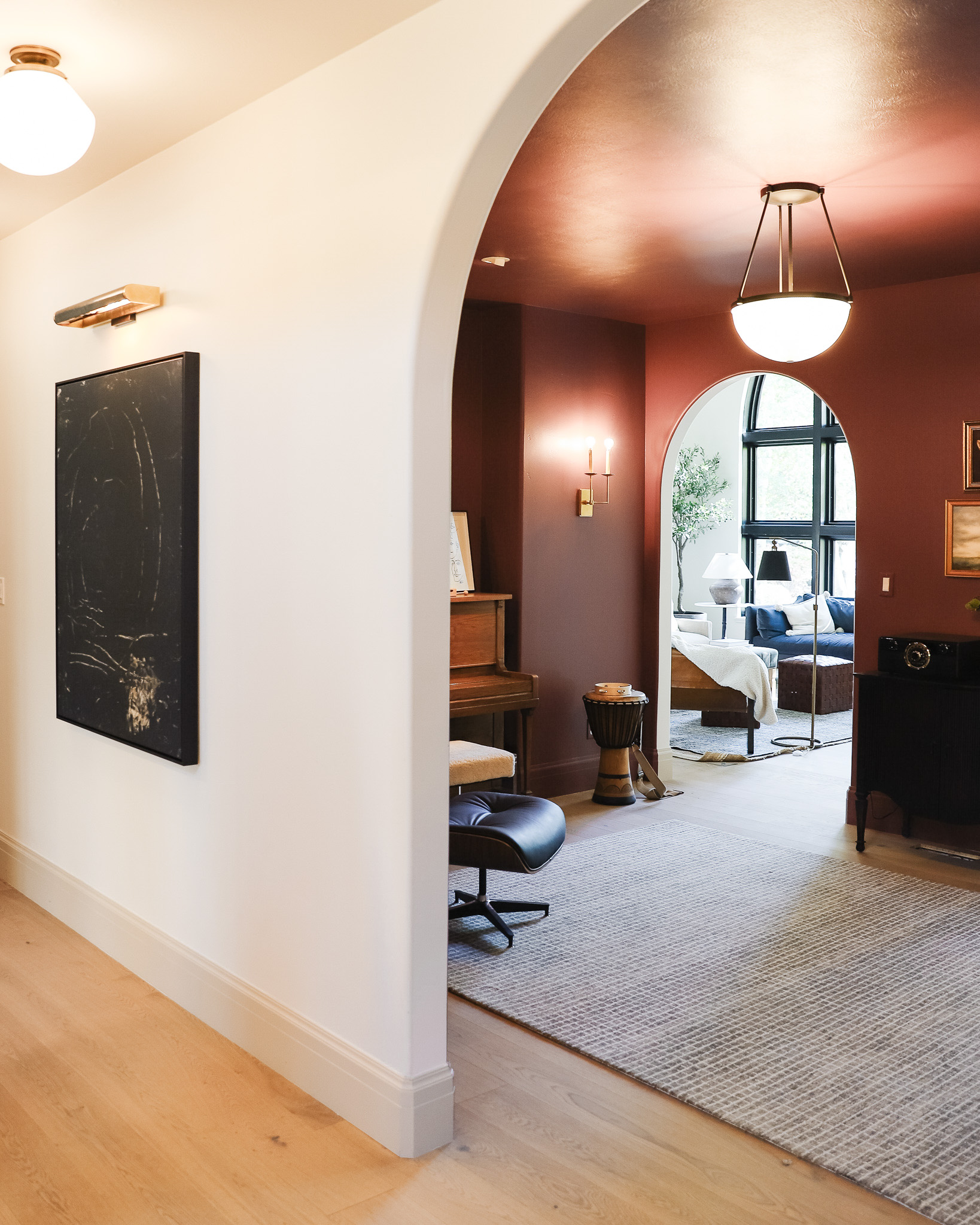
Lately, we’ve been moving the art around in our house a lot. We moved the Kader Boly “Mirgration” piece from the hallway to the dining, and the Victor Ryan “Midnight II” piece from the mantle to the hallway. I love how rearranging art gives a room fresh life, sometimes making it seem like a completely different space. Because I shared these art swaps on Stories, I welcomed a lot critiques — both on the placement and the art itself. Art is so subjective, and thankfully we don’t all like the same thing, but I got these two comments a couple of times, and they really bugged me:
“Why would you buy that when you could make it yourself?
and
“My kid could make that.”
I should mention that the pieces were both abstract. And I suppose I should be flattered by that first one? I did go to art school. But one of my takeaways was a deeper understanding of art and appreciation for abstract art. I’m going to break down some of what I learned and why I collect the abstract art that I do. If this resonates with you, you probably lean toward abstract art, too.

How to Look at Abstract Art
Like a scent, I let abstract art take me back in time. What memories (places? people?) does this bring up for me? Like a song, I let it set a mood for me. I try not to worry as much about what the artist was seeing or feeling at first: What do *I* see and feel? If I can, I give myself a moment before I look up the title or any backstory on the piece (if you’re in a gallery, avoid reading the wall at first). Let the piece take on a story for you.
Next, I pay attention to what’s repeated. What’s layered? Where’s the balance? What do I think of the composition? Are the colors vibrating? I let myself be moved and even confused. Sit in the question for a little while. I let my imagination wander. What intangible emotions might be explored here? My advice: Don’t try to find an “answer.” You get to decide if this piece has any meaning or emotion to YOU.
Sometimes, I think of abstract art as a process of elimination. Once you take away the realism… forms… anything “literal”… what’s left is a lived visual experience. There’s freedom and intuition.
Revisit it. What does this piece bring up for you today? In this sweet and funny video of Steve Martin at the MoMA, he’s convinced that the abstract painting he loves is a landscape. The next time he sees it, it might be a figure.
How to Collect Abstract Art
I’m always a fan of investing in original art. There’s a good chance it will increase in value, and it doesn’t have to be expensive to start a collection — even one of potential heirlooms. But a handsome print will certainly help you to hone your tastes, and a signed print is very valuable. The most important advice I have for you when buying art is to buy the piece you can’t live without. If it tugs at your heartstrings or stirs your soul or just gives you the feels — make it yours.
How to Decorate with Abstract Art
Let it choose your color palette: Fall in love with a piece of abstract art and let it be “the thing” that you design around. A piece of art can be a jumping off point for the colors in the rug, the curtains, the throw pillows…
Let it punctuate your space: We love tone on tone around here. But maybe you want something to really “pop” in your room. An abstract piece could be the splash of color you’re craving or the accent that catches your eye when you walk into a room.
Let it set the tone: What’s the vibe of this room? Moody? Cozy? Serene? Romantic? Productive? Creative? Abstract art can help you tell that story. It’s like you’re piping music into the room. Imagine a soft watercolor in the bathroom, giving you spa vibes — dramatic “swipes” in the living room, stirring conversation — geometric shapes in the office, asking for order.
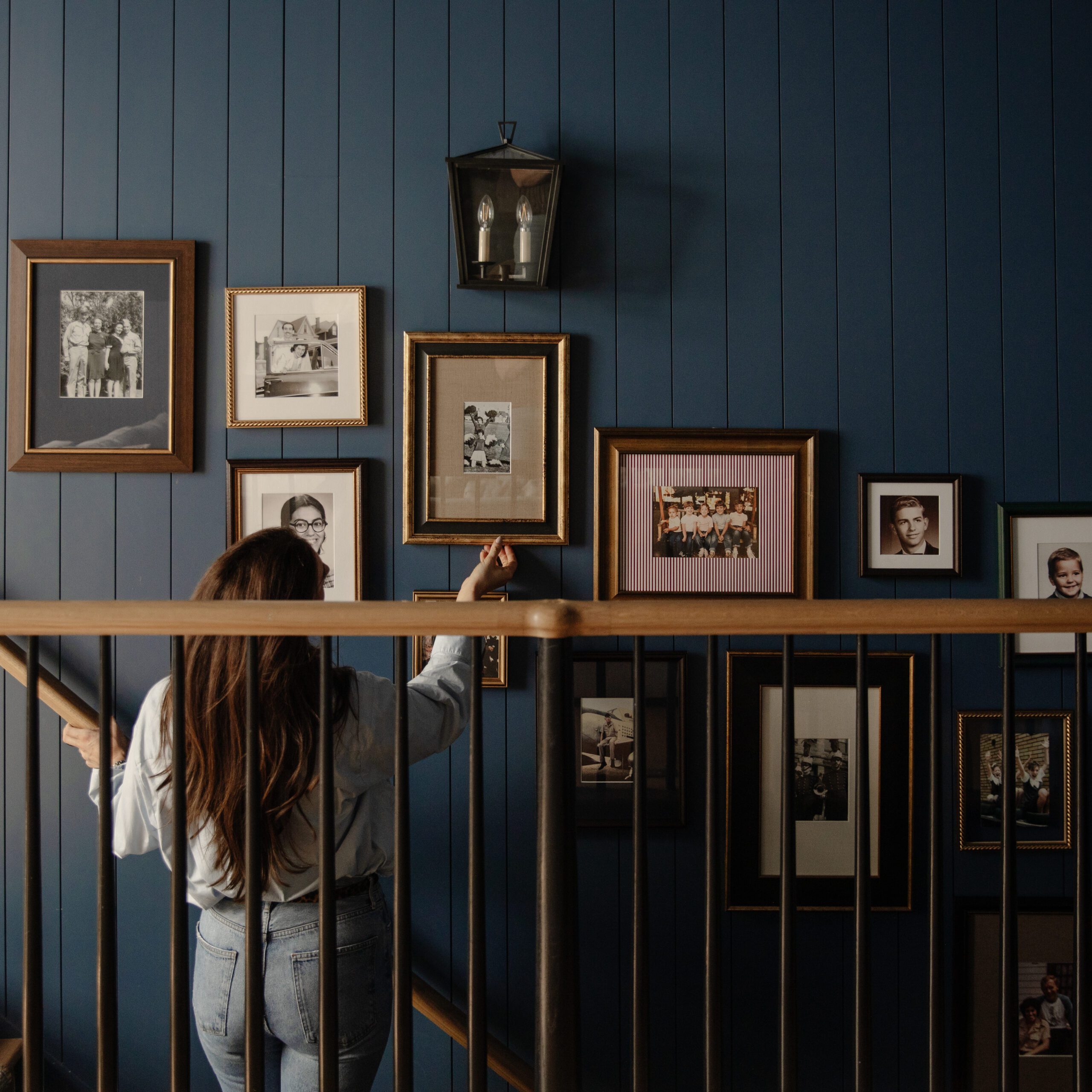
Let it fill in the gaps: Maybe you need a piece to tie it all together. A piece of abstract art might be just the thing that’s missing — the swath of color that makes the sofa make sense with the armchair. Or maybe it’s the glue that’s holding the gallery wall together.
Of course, the lovely thing about art is that it’s subjective. If you don’t like a piece, or if abstract art just isn’t your thing as a whole, think about why. Don’t worry about forcing a feeling or stress that you don’t “get it.” Let it be a mystery.
There’s a rich history here, with major movements, that this blog doesn’t even touch. Hopefully this ignites some curiosity in you or validates a style of art you might be gravitating toward.
One more thing: Resist the phrase, “My kid could do that.” Even if the piece feels oversimplified to you, it’s insulting to the artist. And even if the artist can’t hear you, we’re not really about stamping out creativity and intention in the world, are we? Also, abstract art has a long history, and your child didn’t do that in the ’60s, for example, before anyone was making art like that :) Finally, a recent study suggests that even the untrained eye can distinguish between a painting by a professional artist and one by a child (or chimp!).
But, hey — give your kid a paintbrush! Start them young, I say :)
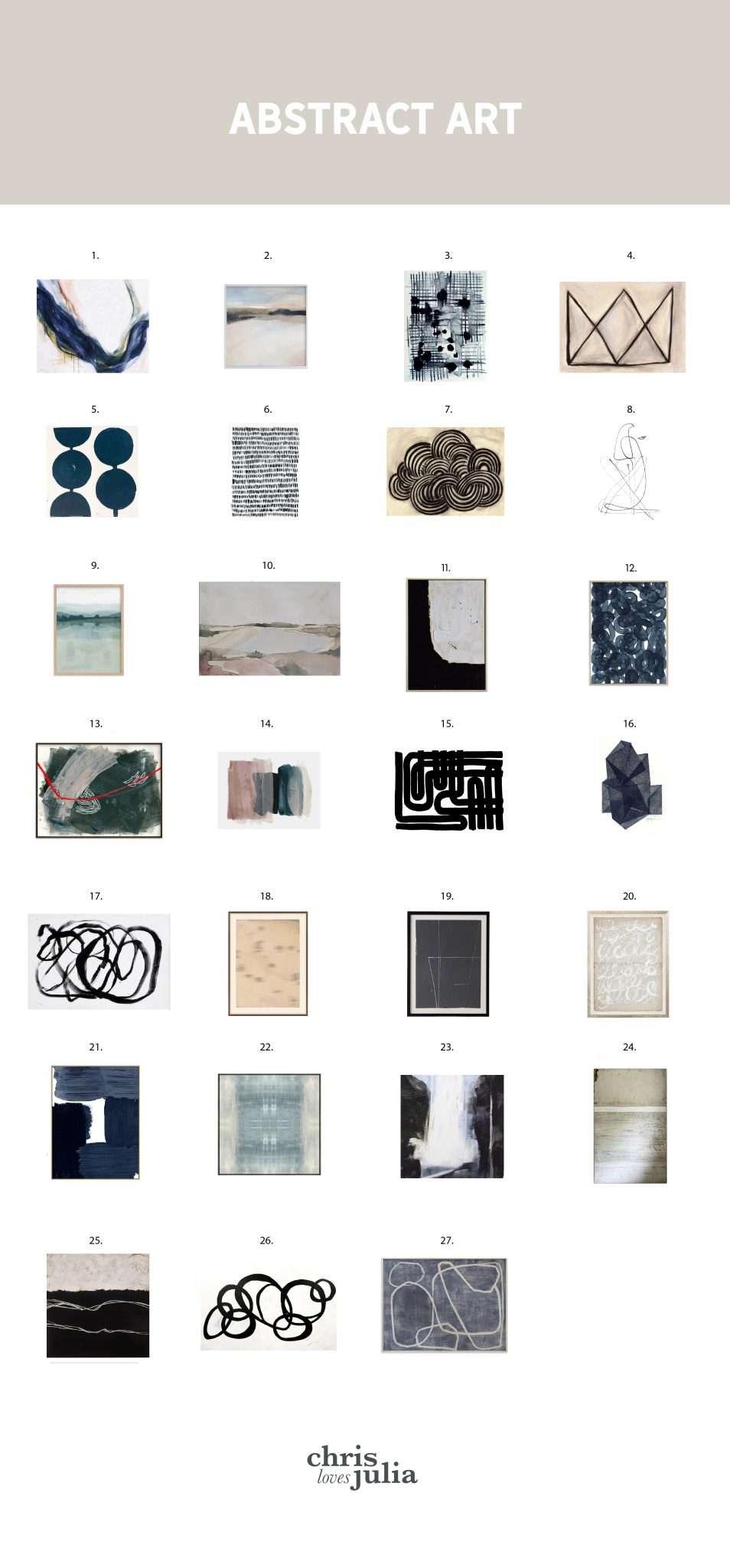
- “Wind Blue 484” by Jessy Cho
- “A Winter’s Walk” by Alison Jerry Designs
- “Crosshatch” by Kelly Witmer
- “Royal” by Rob Blackard
- “Modern Circles in Midnight Blue” by Stacy Rajab
- “NY16#27” by Jennifer Sanchez
- Knott Cloud” by Rob Blackard
- “Ramona” by Shira Barzilay
- “Cool Reflections” by Karen Kardatzke
- “Fields” by Jenny Komenda
- “L35Y” by Leah Caylor
- “Indigo Ink” by Erin McCluskey Wheeler
- “I Need A Sign” by Lauren Packard
- “Minimalism 1” by Iris Lehnhardt
- “Maze” by Kate Roebuck
- “Lava Stone no.5” by Paulina Vårregn
- “KNOTS” by Jenny Komenda
- “Moving Parts” by NA
- “Borderlines” by NA
- “Beige Abstract 2” by NA
- “Navy Swatch” by NA
- “Driven Textile II” by Carol Benson-Cobb
- “09.01.2018” by Stephane Villafane
- “Another Blues” by Christian Hetzel
- “Endeavor Diptych” by Helen Bellaver
- “Venn” by Steve McKenzie
- “Squiggles” by Camille Pietrow




Love this and love switching pieces around! I’m really into waiting for the right pieces. Good art takes time to find. Sometimes, I’ve looked at abstract art I like and think – ‘I can do that’ and tried it and it’s an absolute disaster. Abstract art is hard and abstract artists are professional artists for a reason. Even paintings that may look simple with lines or a few shapes take certain artistic talent that I clearly do not possess.
This post was therapeutic for me. Thank you!
I agree with everything you’ve written and it’s sad that there were comments like those. Why would anyone want to squash creativity or denigrate it? I LOVE the simplicity of some abstract art; it’s calming. Often the complexity or skill in creating simplified art is the pairing of colors or movement. That is not an easy feat and certainly takes talent. Good post!
Thank you for this post Julia! I don’t even know why, but I am always, always, always drawn toward abstract art.
What happened to the tapestry in your dining room? I was so bummed when it sold out so fast! I want it for my cabin.
I think we are going to put it in Polly’s room!