


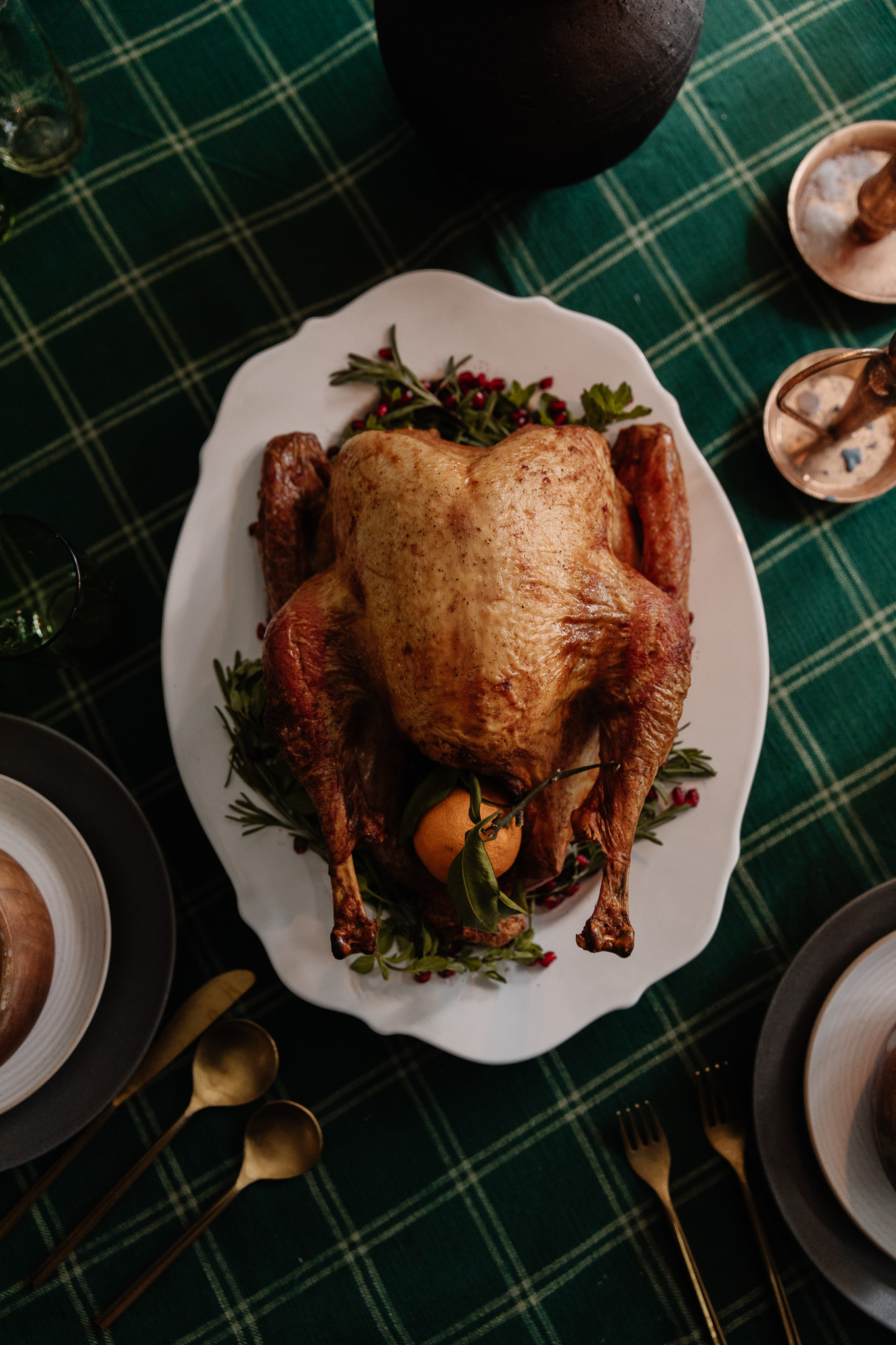
Everyone knows the importance of the turkey on Thanksgiving, and we also know it takes more than gravy to fix a dry, flavorless turkey. Here, we share all the tips and techniques that will help you roast and carve a perfect, tender, and juicy turkey for Thanksgiving this year.
How to Roast The Perfect Thanksgiving Turkey
1. Don’t cook stuffing in your turkey
Stuffing will often take longer to heat than the turkey itself. By the time your stuffing comes up to a safe temperature, the breast will often be 180 or higher, i.e., jerky.

2. Smaller turkeys are better
I know it’s cool to deliver a giant turkey to the table for your guests, but large turkeys are more likely to dry out. Stick with smaller turkeys, between 12 and 14 pounds, and do more than one for large groups.
3. Brine your turkey
Brines not only add extra moisture to the turkey but lots of flavor.
4. Use a turkey triangle
A turkey triangle is a triangle of tin foil placed over the breast for the majority of cooking, which slows the cooking of the breast meat and allows the dark meat to come up to a higher temperature, with the breast meat drying out. I personally do not view the turkey triangle as “optional.”
Here’s a video showing the entire process!
Cooking the Perfect Turkey

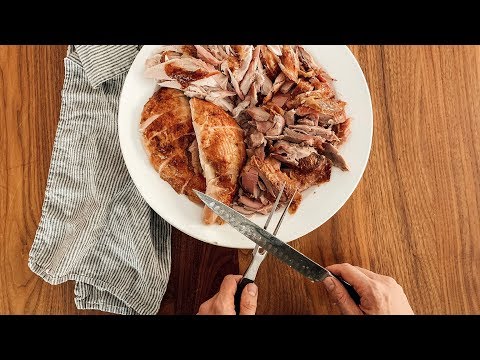
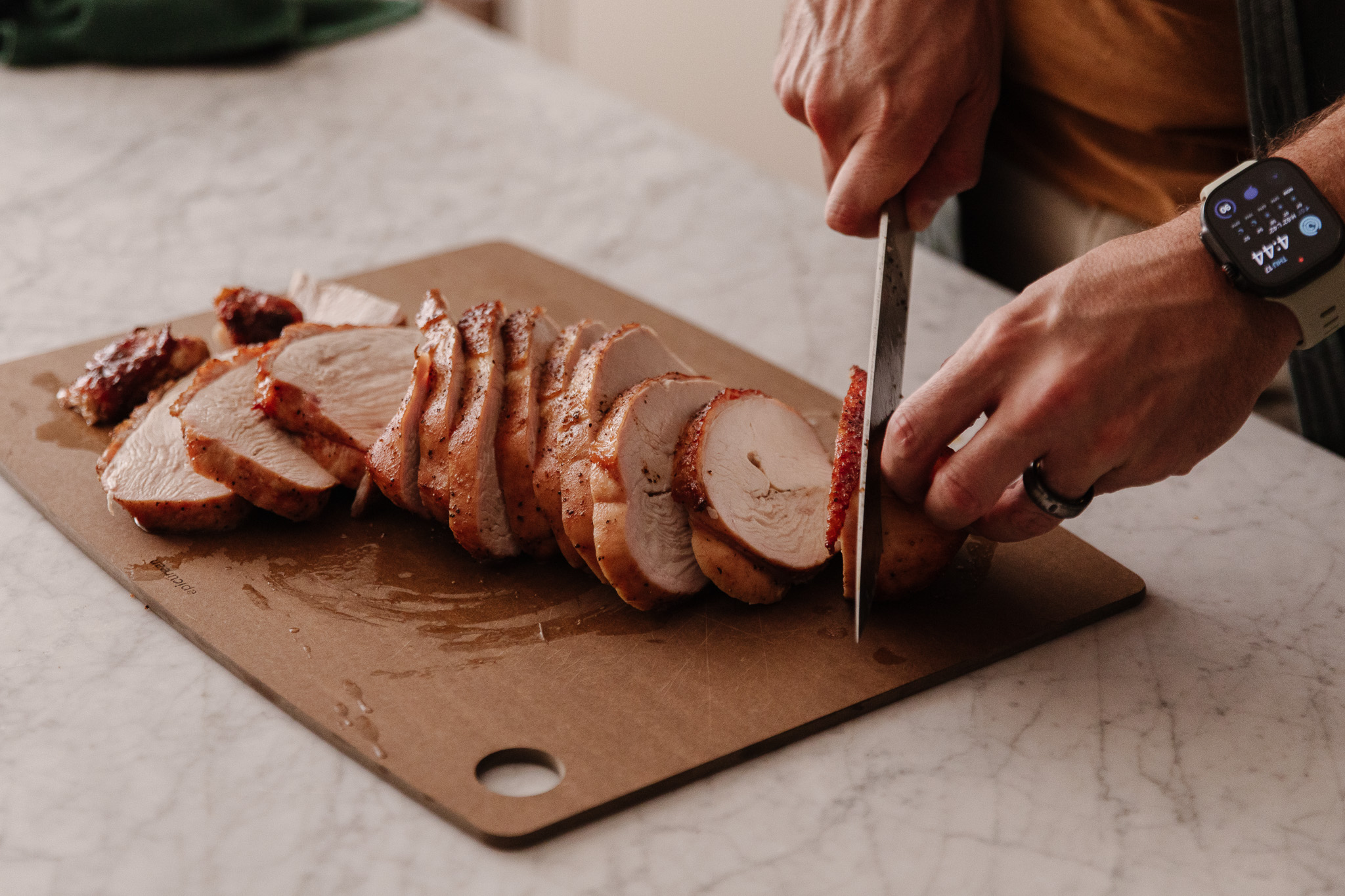
If you’re also looking for a how-to on how to carve (because how else do you learn), here’s a carving tutorial to help you along.
Carving the Perfect Turkey
Equipment used (or similar):

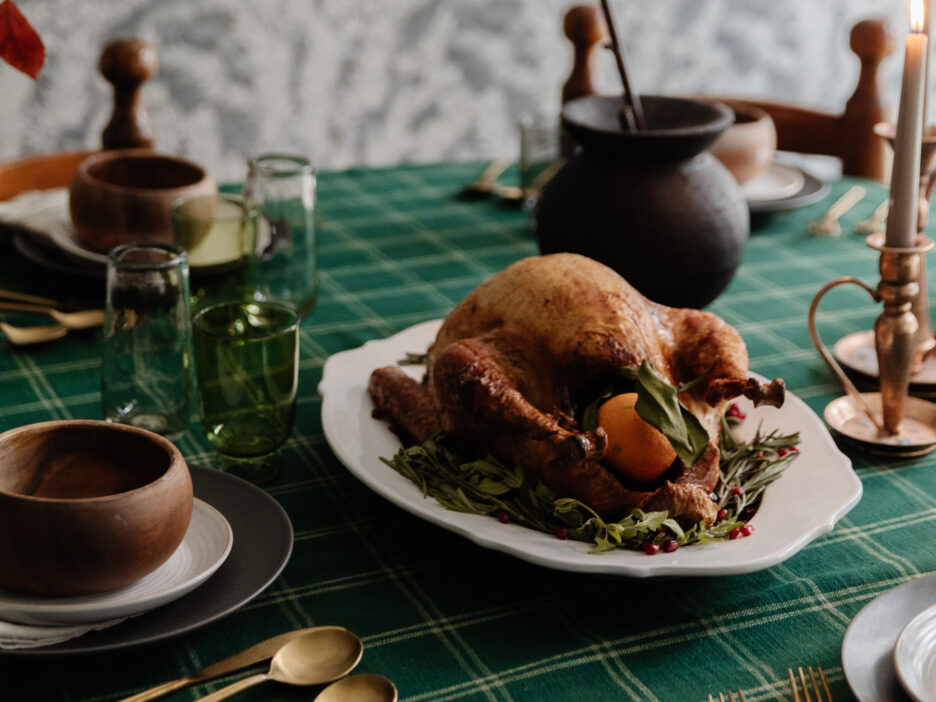
A Perfectly Roasted Thanksgiving Turkey
Ingredients:
For brining the turkey
- 3 inches fresh ginger
- 2 sprigs fresh oregano
- 2 bay leaves
- 3 sprigs fresh thyme
- 7 garlic cloves smashed
- 2 cinnamon sticks broken in half
- 2 pieces mace optional but encouraged
- 5 cloves
- 1/2 tbsp black peppercorns
- 1 tbsp allspice berries
- 1 tbsp juniper berries
- 1 gallon water
- 1 1/2 cups kosher salt
- 1 cup brown sugar
- 2 lemons
- 1 12-14lb turkey
- 2 7lb bags ice
For roasting the turkey
- 1 cinnamon stick
- 1 sprig rosemary
- 1 sprig thyme
- 1 sprig oregano
- 1 sprig sage
- 1 lemon cut in half
- olive oil
- salt
- pepper
Directions:
Brine the turkey
- Lay out a couple layers of cheesecloth. On top of it put the ginger, oregano, bay leaves, thyme, garlic, cinnamon, mace, cloves, black peppercorns, allspice berries, and juniper berries. Fold up the edges and tie some string around the top to form a packet.
- In a large pot, add the water, salt, sugar, lemons, and spice packet. Bring to a boil over high heat and simmer for 10-20 minutes.
- In a 5 gallon food grade bucket, add one bag of ice. Pour the hot liquid from the pot over the ice into the bucket. Add the turkey, breast side down, to the bucket, stuffing the packet of aromatics into the cavity.
- Add as much ice as can fit in the bucket while still being able to get the lid on tightly. Set in the fridge for 24-48 hours.
Roast the turkey
- Remove the turkey from the brine and discard the brine and packet of aromatics. Pat the turkey completely dry with paper towels, on the outside as well as the inner cavity.
- Place the turkey on a roasting rack in a roasting pan. Loosely place the cinnamon stick, herbs and 1 half of the lemon in the inner cavity. Stuff the other half of the lemon in the neck area.
- Truss the turkey by folding the wing tips back over themselves and tucking them in, and tying the ankles together.
- Make a large triangle out of tin foil. Form it over the breast with the top point of the triangle meeting the bottom of the breast. Fold any excess foil back so the wings are not covered. Remove the foil triangle, but keep its shape so it can be easily placed back on the turkey.
- Preheat the oven to 500 °F degrees. Rub the turkey with a light layer of olive oil, and season with salt and pepper. Once the oven is heated, roast the turkey, uncovered, for 30 minutes.
- After the first 30 minutes is up, reduce the oven temperature down to 350 °F and remove the turkey from the oven. Using a meat thermometer with 2 wire leads, stick one lead into the breast meat and one to the inside of one of the thighs. Place the foil triangle back over the breast, and put the turkey back in the oven.
- Roast the turkey until the breast meat reaches 150 °F . Remove the foil, turn the oven to 400 °F and roast until the breast meat reaches 160 (the thigh meat will likely be around 180 °F or even more – that's what you want).
- Remove the turkey from the oven and let rest, uncovered, for 60 minutes. After it has rested, carve and serve. Happy Thanksgiving!
Other helpful Thanksgiving posts:
• Savory Cornbread Stuffing
• Scratch-Made Asparagus Casserole (my version of green bean casserole)
• Country-Style Herbed Mashed Potatoes
• Dijon Country Gravy Made with Turkey Drippings
• Homemade Cranberry Sauce Worth Serving
• Roasted Sweet Potatoes with Maple and Bacon Vinaigrette
• Light and Airy Pumpkin-Ricotta Cheesecake
• How to Make an Entire Thanksgiving Meal In One Oven



I just wanted to say thank you! I’m just watching the turkey cook this morning and it makes me so happy! I’ve been using your turkey brine and roasting recipe for four years and every time it has come out amazing! I’ve gained so much confidence cooking such an intimidating dish. Thank you!
When you turn the oven down and remove the turkey (and stick leads, etc,), do you keep the turkey out of the oven until then oven reaches 350? Or do you put it back in as soon as the leads and foil step is done?
You can put it back in the oven once the foil step is done—-the door opening a couple times will help drop the temperature a bit.
Oh thank you so much for the quick reply. Planning how to cook thanksgiving for 14 people in a tiny oven and tiny kitchen in Germany has been stressful. Your couple of pages here has really helped me make a plan. I hope it works. Without your pages, I don’t think it will be/would have been possible. Thanks!!
Hi Chris, I am making your turkey recipe for Friendsgiving tomorrow and I did not have a bucket. I made the brine and let it cool, but it was still warm when I poured it over the turkey. Is it OK that I used less ice than what this recipe calls for? I ended up putting the turkey in the fridge. I’m just worried that I didn’t let it cool down enough before adding the turkey. Will the water/brine ratio make the turkey too salty? Will my turkey be OK because the Bryan is a little warm still?
I don’t see any major issues happening. Hopefully it all turned out ok for you!
How do you fit a 5 gallon bucket in the fridge? That is the biggest obstacle.
I found a square 4 gallon bucket that is shorter that works great for this. Depending on the climate where you live, if it’s below 40 degrees outside, you can also just up the ice and keep it outside (covered, of course)
Hi! I’m so excited to try this method! I was wondering if you baste the turkey throughout the cooking process or if you just leave it alone and let it roast.
Thanks!
I don’t baste.