


Adding a pot filler to your kitchen is a total luxury. Meaning, it’s not necessary, not that you have to lead some luxurious lifestyle to have it (they’re similarly priced to a normal faucet). But, you don’t need it. And if your kitchen design doesn’t allow for it, don’t feel like there are things you won’t be able to do if you don’t have one. Anything you can do with a pot filler, you can do without. BUT, when you’re talking about creating a kitchen you love, convenience is a big factor. This post makes the case for why you might want one.
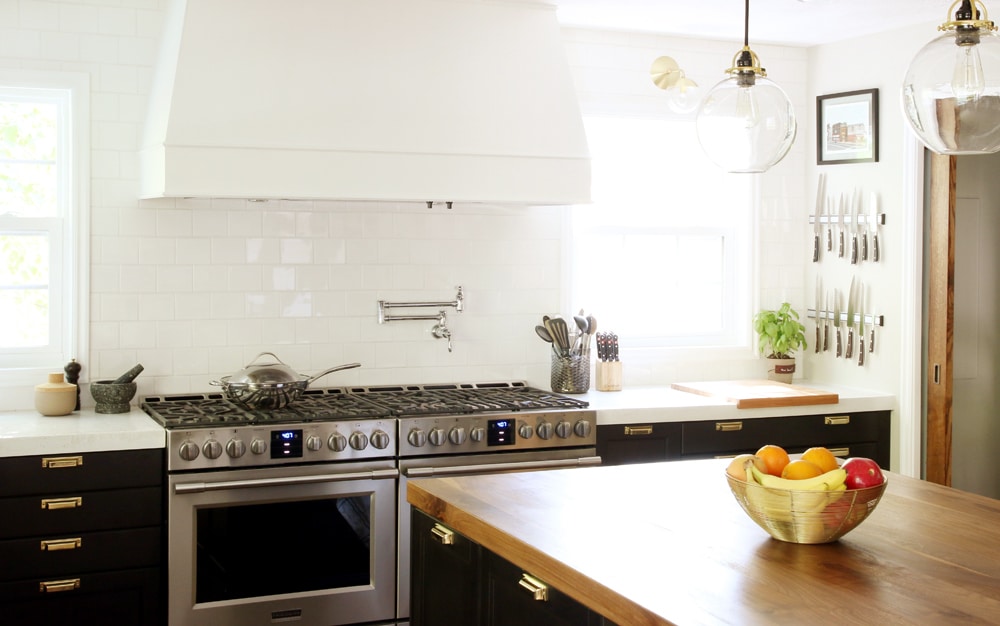
Anytime we post a picture of our ranges, we get two kinds of initial comments. “What is that over your stove?” and “I love that pot filler! I dream of having one.” Either way, inevitably, a few people will respond to that person with comments like, “Why would you ever want one of those? They are completely useless. You still have to carry your pot back to the sink to empty it.” I have to chuckle to myself, because does something have to make every aspect of cooking easier in order to make any of it easier? Even if the only use for a pot filler was to fill pots of water for boiling pasta or eggs, it still makes that process at least 50% more convenient. And you feel pretty cool doing it, too. But also, this thought also has a narrow view of how we use water in cooking.

You use water just about anytime you cook. The truth is, once you have a pot filler in your own kitchen, you tend to find all kinds of uses for it, because it’s so convenient. Some of our more common uses, that don’t require emptying the pot of water, include:
• Adding water to a soup
• Adding water to make a stock
• Adding water to smoothies
• Adding water to rice or oatmeal
• Adding water to a braise
• Filling a kettle for a hot drink
• Making sauces
• Filling up a pitcher of water when company comes over (faster than most sinks)
I can already hear the rebuttals. “Who cares? You can do all of that with a regular sink.” For my rebuttal to that rebuttal, see the first paragraph. ;)
The long and short of it, if you’re thinking about adding a pot filler to your kitchen reno plans, I say go for it. When we added ours, we were going to have the wall open anyway. We were moving walls that had plumbing in them already, and patching into the plumbing was simple. For reference, we placed ours so the faucet head is 14″ above our range top and centered the faucet base with the right range. You have to decide if it makes sense in your own plans and how much it will cost, vs. how much benefit you’ll get from it. But when you’re weighing those benefits, don’t limit them to pasta, potatoes and eggs. You just might find that, once you have it, you’ll find yourself using it every day.
Would you add a pot filler to your kitchen?
P.S. Another humorous post from a pro-pot filler.


I think pot fillers are a way for designers/builders to make an extra buck. My sister has one and I stayed at her house for two weeks while she was recovering from surgery. If you can’t carry a pot of cold water 3 feet from the sink to the stove, you better not be carrying a boiling pot of pasta from the stove to the sink… and after cooking a pound of bacon the faucet needs to be cleaned.
Love the way this kitchen looks. We are considering doing a similar range setup to what you have. How are they holding up wear wise and are you liking how they perform?
They’re doing so great! It was an awesome decision – one we’ve been happy for every day.
I really have to ask – am I the only person that uses filtered water when cooking? We have good tasting tap water, but I still like to filter it because it sometimes has a bleachy smell. I just think it smells and tastes so much better when filtered (water should taste pure and have no smell). I have a filtered pitcher and I use it to make coffee, fill pots, and I even give my dogs filtered water in their bowl. We use a filter on the fridge for drinking water. Am I crazy to do this? For that reason, I don’t think I would ever use a pot filler.
My husband was the “you still have to carry the pot back…” guy, but I still got my pot filler and I LOVE it. It adds so much cool factor to the kitchen and YES, it’s so handy! I came over to visit because I found your post on the concrete countertops in your kitchen. We’re forming up tops in our pantry as I type and I’m glad I found all your tips. I hope they turn out as beautiful as yours!
-andi
My concern would be how to rinse them out when there’s no sink nearby? I’ve been told to always let the water running for a little while before using it, to get rid of the toxins that comes from the pipes. In any other way I can fully see the usefulness of a potfiller.
I think when you use it every day, that’s not a big deal?
We just built a house, where we included *gasp* a pot-filler in the kitchen. I had no idea it was even a controversial issue! lol Also, I’ve never heard of letting water run for a few minutes before using it. The only time I do that is if I need hot water so I have to let it run to heat up. My body is probably full of toxic pipe chemicals. Ah well, such is life. :)
Also, our pot filler isn’t something I use every day and I don’t know that I would have gone through the expense if we’d been remodeling instead of building new, but it’s certainly a nice feature and I love the way it gleams against the backsplash!
I’m not sure. You use the kitchen faucet everyday to, but you’re still supposed to run that a couple of minutes every time you use it. But I don’t know if the recomendations are different in the US?