


If you had similar childhood experiences to mine, “tinfoil dinners” probably evoke memories of potatoes, onions and ground beef, rolled up in tinfoil, cooked over a fire. Maybe you had some carrots, too. While I actually love these traditional tinfoil dinners and the camp side memories that accompany them, I’ve recently adopted a new approach, and I don’t think I’ll ever go back.
The approach is this – cook dishes, not meals. Instead of 4 personal-sized packets for 4 people, meant to be a whole meal on their own, I cook 2 or 3 giant packets, each its own dish, and serve it up family style. And while this approach is awesome for camping, the best part is you don’t need to wait for a campfire. Use the grill, or even the oven, and enjoy it now.
I’m gonna share the recipe for a recent, super quick and super successful tinfoil dish I cooked on our grill, but I challenge you to take any of your favorite dishes and convert them to a tinfoil dinner. Then you can make it next time you go camping and blow everyone away. This is enough for 4 people.
• 5 medium-sized potatoes, washed, sliced
• 1 medium-sized yellow onion, sliced
• 6 cups of kale, washed well, ribs removed, chopped
• 1 cup precooked, roughly chopped bacon
• about 3 Tbsp cooking oil
• salt and pepper
Put everything in a bowl, toss it around. You’ll want probably 2-3 big pinches of salt, and 1 or 2 big pinches of pepper. Toss it together until everything is lightly coated with the oil. Again, it’s very important to use precooked bacon, otherwise your end result will be full of grease and the bacon will be soggy. No good.
Now, make your tinfoil packet. You’ll need 6 pieces of heavy-duty tinfoil, each about 20 inches long. I’ll try to explain this as best I can, but the basic idea is we’re taking two sheets of tinfoil and creating a larger one. Lay your first piece of tinfoil, shiny side up. Lay another piece of tin foil directly overtop that one, with the shiny side down (so the shiny sides are touching). Then, fold one of the long edges over about 1/2 an inch. Press down to make it flat. Then, fold that edge again. And again. And again. Probably 4 or 5 times, fold it and press it down so it’s nice and flat. The folds will create a seal and join the two pieces together. Now you can gently open the sheets up, like pages of a book, and lay your now large piece of tinfoil down, shiny side up. Repeat this process two more times with the other 4 sheets, until you have 3 large sheets of tinfoil.
Hopefully that made sense. Sorry for the lack of pictures. But we aren’t done yet.
Next, lay one of the large sheets on top of the other (both with shiny side up) and fold each edge over about 1 inch (you can see it in the picture below). Do this twice, creating a large, double-thick sheet of tinfoil. This will be the base of your packet. The packets are typically too large to flip, so the thick base layer protects the ingredients from the harsh heat, preventing your food from burning while it cooks.
Pour your food onto the tinfoil, like this super high-quality picture taken with my phone demonstrates:

Now, lay the other sheet of tin foil over top and roll the edges of the bottom piece up around the top piece, forming your packet and creating a tight seal.
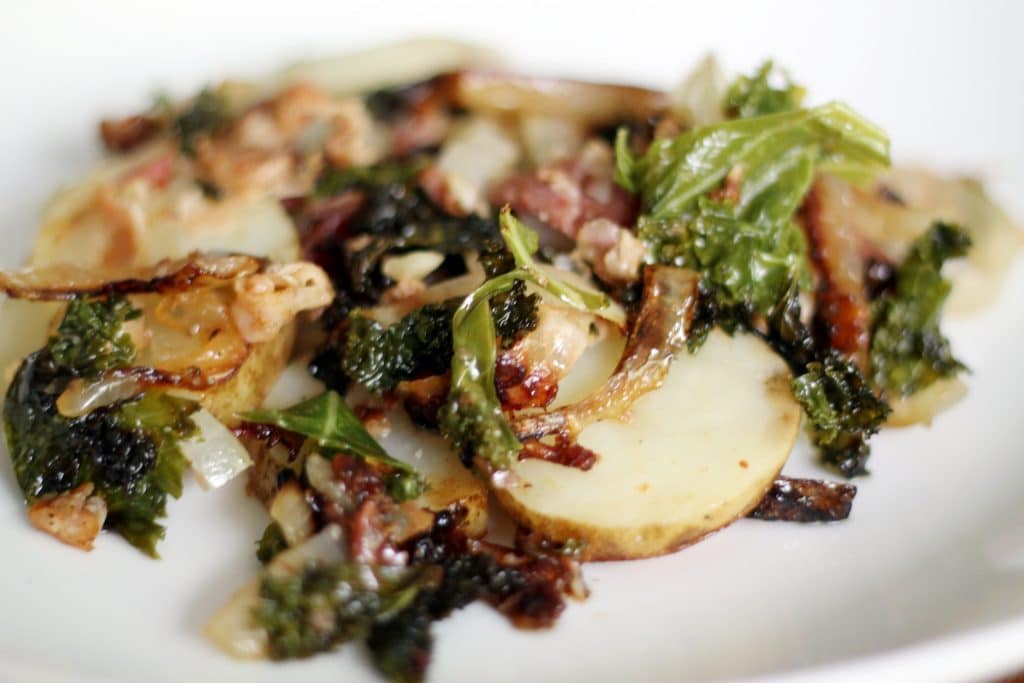
Because these packets are a bit larger, you need to pay a little more attention to the heat you cook them at. If cooking over a campfire, pull one layer of hot coals out from the fire and set the packet directly on top, then place 3 or 4 hot coals on top of the packet to create an oven effect. Swap out the coals as needed to keep them hot. If cooking on a grill, simply place the packet directly over medium-high heat, and close the grill lid. Whichever method you’re using, let the packet cook that way for about 15 minutes, without messing around with it. This allows time for the ingredients to release some liquid, which turns to steam and cooks the stuff through. Then, after about 15 minutes, poke a few holes in the top of the packet and cook for another 5-8 minutes. This allows the steam to escape and prevents the dish from ending up soggy. Here’s what it looks like when it’s done:

The onions caramelize, the bacon crisps and the potatoes are perfectly cooked. But honestly, the real star of this dish is the kale, and I’m being serious. If you aren’t a kale person, I challenge you to try this and not love it. Kale is a really robust green, which can kind of make it taste like dirt. But it maintains its texture long after most greens get mushy, and in this packet, the kale almost becomes crispy. It absorbs a truckload of flavor from the bacon and onions, and keeps the whole dish from feeling as heavy as it otherwise would.
So which of your favorite dishes do you think you could tinfoil-ize? Is this “new” approach something you’ve already been doing? I’d love to hear any ideas or experiences you’ve had, and hope you’ll give this one a try. Oh yeah, and my favorite part about cooking tin foil dinners on the grill, is I can grill a steak or piece of chicken separately, the proper way, and serve ’em up together. Peace out, Internet friends!

Potato, Bacon & Kale Tinfoil Packets
Ingredients:
- 5 medium-sized potatoes washed, sliced
- 1 medium-sized yellow onion sliced
- 6 cups of kale washed and dried well, ribs removed, chopped
- 1 cup precooked roughly chopped bacon
- about 3 Tbsp cooking oil
- 2-3 large pinches of salt
- 1-2 large pinches of pepper
Directions:
Create your tinfoil packet
- You’ll need 6 pieces of heavy-duty tinfoil, each about 20 inches long. The basic idea is to use two sheets of tinfoil to create one larger one.
- Lay your first piece of tinfoil, shiny side up.
- Lay another piece of tin foil directly overtop that one, with the shiny side down (so the shiny sides are touching).
- Fold one of the long edges over about 1/2 an inch. Press down to make it flat. Then, fold that edge again. And again. And again. Probably 4 or 5 times, fold it and press it down so it’s nice and flat. The folds will create a seal and join the two pieces together.
- Gently open the sheets up, like pages of a book, and lay your now large piece of tinfoil down, shiny side up. Repeat this process two more times with the other 4 sheets, until you have 3 large sheets of tinfoil.
- Next, lay one of the large sheets on top of the other (both with shiny side up) and fold each edge over about 1 inch (you can see it in the picture below). Do this twice, creating a large, double-thick sheet of tinfoil. This will be the base of your packet.
Assemble and cook the packet
- Mix all the ingredients together in a bowl, toss to coat evenly with cooking oil
- Pour ingredients onto tinfoil base, lay the other sheet of tin foil over top and roll the edges of the bottom piece up around the top piece, forming your packet and creating a tight seal.
- If cooking over a campfire, pull one layer of hot coals out from the fire and set the packet directly on top, then place 3 or 4 hot coals on top of the packet to create an oven effect. Swap out the coals as needed to keep them hot. If cooking on a grill, simply place the packet directly over medium-high heat, and close the grill lid. Whichever method you’re using, let the packet cook that way for about 15 minutes, without messing around with it. This allows time for the ingredients to release some liquid, which turns to steam and cooks the stuff through. Then, after about 15 minutes, poke a few holes in the top of the packet and cook for another 5-8 minutes. This allows the steam to escape and prevents the dish from ending up soggy.



This was amazing! We ended up adding extra kale to use up the bunch – it turned out beautifully! I would even consider eating the leftovers with eggs the next morning (ok- i did that – it.was.dynamite).
This is on the grill as I type!! First recipe of yours I’m trying–smells amazing! (Also, can’t wait to see your cabinets!)
Awesome Kristin! Be sure to come back and let me know how you enjoyed it or if you did anything different that you really liked. Always love a new idea! :)
This looks absolutely delicious! Definitely need to try it!
Sounds so good! I love tinfoil dinners and campfires but I’d love to cook this at home, any suggestions on temp and time in the oven??
Hi Heather! I would poke holes in the top at the very beginning of cooking (2-3 holes is all) and cook at 425 for the full 20 minutes.
Hope this helps!
This looks amazing! Good thing I’m going grocery shopping in the morning!
Would the extra large tin fool work inside of putting two sheets together? I have some really large foil, or is there a reason to make it this way?
Ps. Happy cabinet painting!!
If the tin foil is large enough, you can definitely use it. You want it to end up about 18 inches wide or so, after putting the two pieces together. I didn’t have any that wide, so I combined two regular sheets, but if you have it, for sure use it. Assuming it’s heavy duty, that is. If not, then you can add another layer and that should make up for it.