


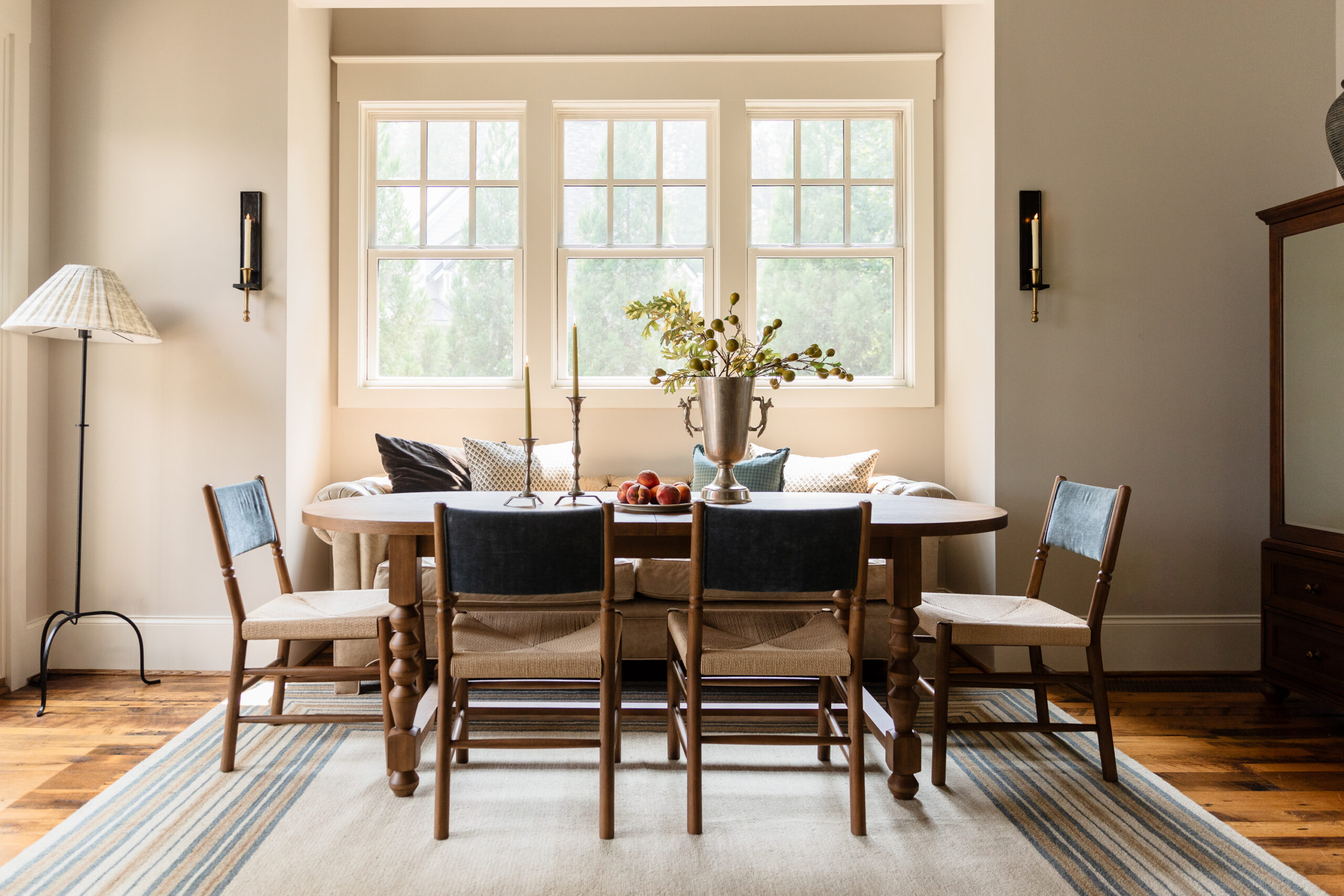
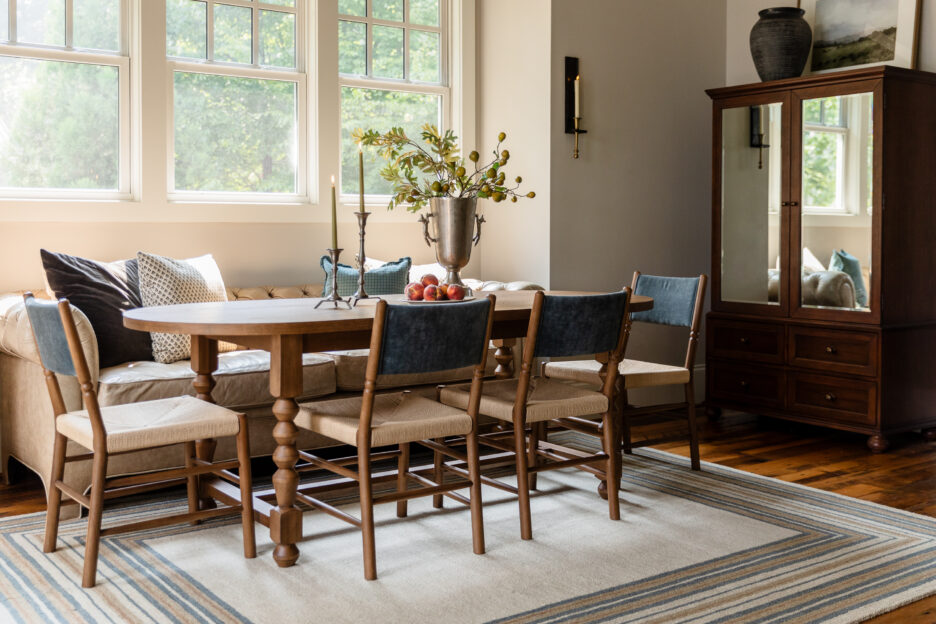
When we were moving furniture around at Merrimore Lake House, as I brought in a new dining table, there was a small sofa in another room with nowhere obvious to go. We bought this lake house last year, fully furnished. And we’re slowing moving things around and bringing in pieces we had at home. The couch was here! There’s an indent in the wall behind the dining table. So of course my mind starts thinking… sofa, meet alcove. It was really just a test, but somehow, it actually worked.
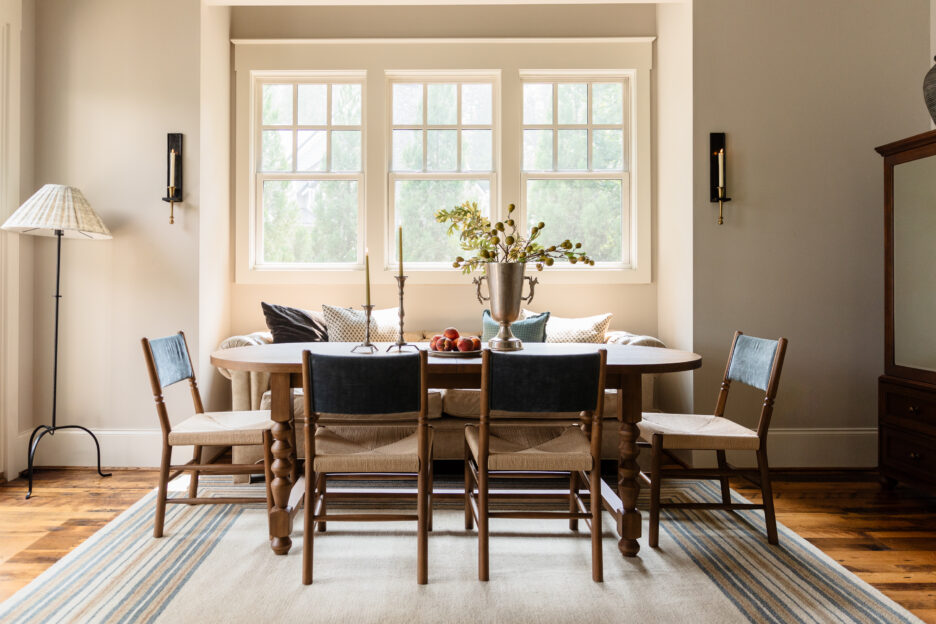
Floor Lamp (similar) | Wall Sconces (similar) | Sofa | Dining Table | Dining Chairs | Candlesticks | Trophy Vase (vintage – similar) | Stems } Wardrobe | Rug
What I noticed first wasn’t that we’d solved a seating problem. It was that the corner suddenly read like a breakfast nook. Not a real built-in — we didn’t build anything — but that same tucked-in, settle-in feeling you get from a banquette someone designed on purpose. The indent did a lot of the work. A sofa sunk into even a shallow alcove borrows the whole look without any demo needed.
I’m working with what I already have and trying out different arrangements. Things will change, but in the meantime I want this space to feel like us and be functional for everyone.
Missed something? Go back to the beginning of the lake house story (and check out the before of the dining room below):

- We Bought a Lake House
- The First Tour: A Walk Through Merrimore House by the Lake
- Lake House Update: Renovation Plans, FAQs & What’s Next
- Why We Hired an Interior Designer for Merrimore House
Why a sofa makes a corner feel built-in
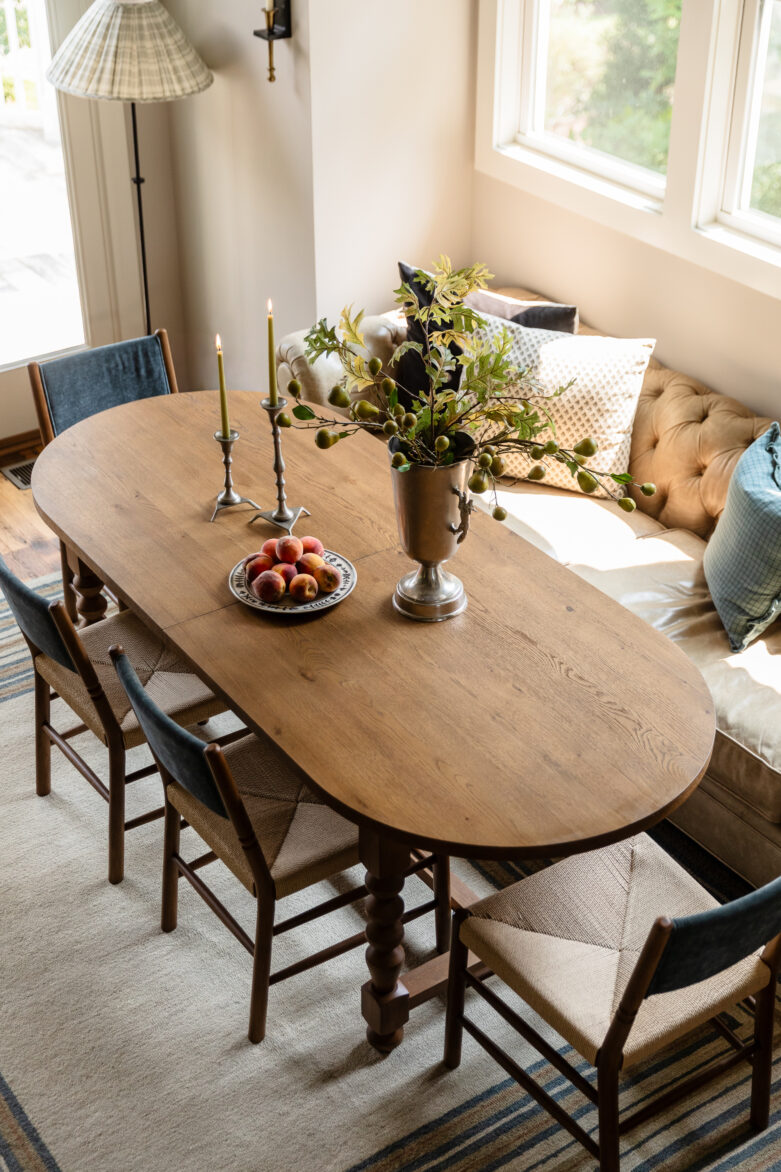
A dining chair sits you up and out. A sofa does the opposite — it’s lower, softer, and it hugs the wall, so the corner relaxes and so do the people in it.
The tradeoff is that a sofa is a remix, not a swap. You’re taking a piece built for one job and asking it to do another, and there’s one problem you may have to solve first.
The one real problem: height
The sofa seat sits lower than a dining chair, and it’s soft, so you usually sink past where a chair would hold you. At a standard-height table you end up a little low — fine for lingering, not ideal for actually eating dinner.
When we hosted family for my mom’s birthday party last weekend, we found an easy solution. My Aunt Betsy just perched on a throw pillow on the sofa, sitting at exactly the right height. That was the whole answer: a firm cushion, or a couple of dense throw pillows, brings you back up to chair height. (Good thing I had styled those throw pillows on the sofa anyway.)
Meanwhile, my sister, Victoria, and I had no problem lounging on that side of the table. It worked great for our 6′ height, so you can always put the taller guests on that side.
How to make a sofa work at your table
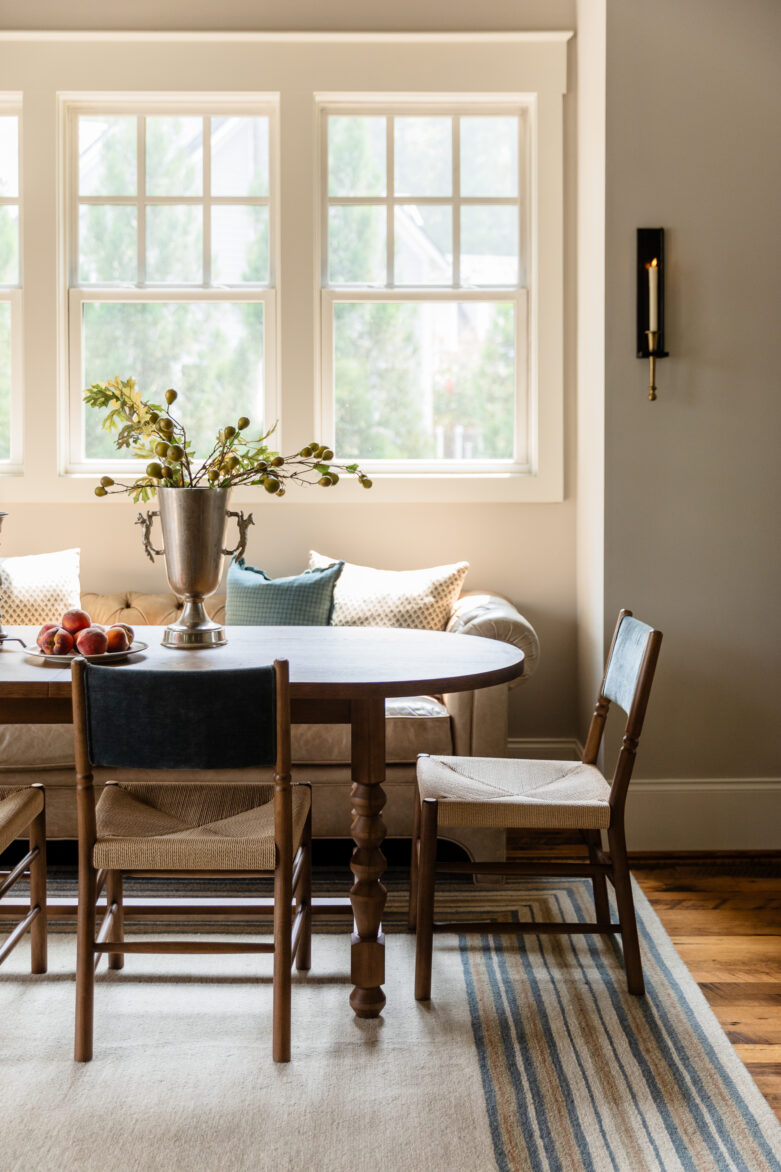
If you’re eyeing a couch you already own, a few things make the difference between looks-right and looks-like-a-mistake. Start with the seat: firm and shallow beats deep and cloud-soft, which sinks you too far back to reach the table. Low or no arms on at least one end lets people slide in instead of climbing over. And since it’s a dining spot now, a fabric you can actually wipe down like a performance weave or a washable slipcover wouldn’t hurt.
The rest is placement. You want a seat height or a throw pillow that can correct it to about 18 inches, a wall or a nook to tuck the sofa into so it reads intentional instead of adrift, and a table with open legroom — a pedestal base, or at least no low stretcher — so you can pull the sofa in close.
Use what you have
The best part of this corner isn’t the sofa. It’s that we didn’t buy anything to make it. Before you go shopping for the perfect set of dining chairs, walk through your own house and look at what’s already there — the piece with no clear home, the awkward little nook you’ve never known what to do with. Sometimes the answer is a firm pillow and permission to use a couch a different way.
Don’t wait! You could be one (fun) afternoon of rearranging away from a dinner party :)






Leave A Reply
Your email address will not be published. Required fields are marked *