


This is a guest post by Andrea Ahedo, our Visual Media Producer/Head Photographer. See her bio at the end of the post.

When our family made the decision to move to the United States, after I had called Monterrey, Mexico home for 10 years, we automatically planned on renting. That’s just how we were wired to think. We’d be starting over in a lot of ways, we’re just a family of three…and grown-ups have houses. (I heard it. I’m 32 and my husband is 37.) So, I arrived to sunny, blue sky, Idaho with our two-year-old son in August 2019 to start my new job at Chris Loves Julia. He and I would live with my parents for a short season while my husband, David, tied up a lot of loose ends in Monterrey with his company and our apartment. In the meantime I had plenty to do to get re-established on my home turf: Get a US drivers license (again), find a daycare, get a car, and find our next home!
On one of my first weekends stateside, my sister Patty took me on a drive to a prominent, but quaint, part of Idaho Falls called “The Numbered Streets.” I rolled down my window and my jaw just stayed dropped for six blocks. Historical, early 20th century homes with loads of character boasted front porches, brick chimneys, shutters, and storybook gardens, on tree-lined streets. As my sister stopped in front of a for sale sign and said, “Let’s call!” Before I could finish rolling my eyes and say we weren’t going to be able to get a house like that, she was already leaving a voicemail with the realtor with my name and number. I later realized she was priming me for thinking differently about our home hunt. We could consider buying a house — we were allowed! One within reason and within our budget, sure, but we didn’t have to automatically think renting was our only option. Still, it was hard to entertain the thought of buying a house when we knew nothing on the subject. What would even be our budget? How much are we supposed to have saved up? Are we even candidates?
I’m going to spoil the end of this story and tell you that yes, we bought a house (you knew that!) buuuuut, what you didn’t know is that I only looked at six houses in eight days, and had the keys to our new home within three weeks. Here’s what I learned through the emotional roller coaster of landing our first home:
1. Know what you want, and what your deal breakers are
I was able to see so many houses in a short amount of time thanks to our incredible realtor, Caleb Fullmer (who you’ll be meeting in a minute), but also because we had already spent two months thinking about “the musts” in our home. Our list looked something like this:
- Garage (we would be braving winter for the first time in a long time!)
- Minimum of three bedrooms
- En suite bathroom in the master bedroom
- A bigger kitchen than what we suffered through in our past apartment
- Ample window light
- Stairs (This feels silly writing, but when you’ve lived in different apartments for 10 years, you want to have a flight of stairs in our home so bad! Whether they were just leading to a basement or second floor, we didn’t care. Needless to say, this was an easy check mark in the search.)
- In-town location, nothing too rural. (This was important to specify to our realtor since we were shopping in Idaho!)
Knowing what you want, and daydream dabbling on Zillow will really get you pumped for what your first step is going to be. Guess what…it’s not calling a realtor. It’s calling a lender.
2. Get along with your lender, they’re going to take your dream of owning a home from possibility to reality.
Even with our polished wish list written up, ready to spill to our realtor, the thing he really needed to know was: what’s your budget? This was not a question I could answer because my only exposure to the word “mortgage” up to that point was playing Monopoly. Your lender is going to talk to you about your current job and monthly expenses. He wants to know your credit score, and any debt you have on your plate right now. If you didn’t guess by the title, a lender is the one who buys the house for you, and whom you pay back your mortgage to over time. A lender will tell you what your house budget should be, based on all the information they’ve gathered, and will estimate what your monthly house payment will be. You can even start a conversation with “I’d feel comfortable with our house payment being at the most ____.” After I talked to our lender, everything felt so much more concrete and clear. I had numbers. I could narrow down my search on the endless real estate listings I’d scroll through night after night. We would be getting a conventional loan, which only required us to put down 3% of the house cost as our down payment. This was doable. It was time to call our realtor!
3. Be critical and realistic as you are shown houses.
I’m the person at the restaurant who just eats the over-sauced pasta because I don’t want to hurt the server’s feelings. Forget about the chef. I’m sensitive to the messenger. Ok, when you’re being shown a house by the realtor, you cannot worry about hurting their feelings! Their job is to help you find what you are looking for. They need to know what your deal breakers and concerns are, so each house you see feels closer to home. Think out loud, and talk through everything you’re thinking as you walk through. You’ll often find your realtor taking notes and shedding his or her much-needed expertise when you’re feeling stuck or overwhelmed. Because my husband was still in Mexico, we FaceTimed as I was shown houses and had the tough conversations of pros and cons together, as he was only seeing potential homes on his phone. Not exactly ideal, but we wanted to have our house for his arrival at the end of October. Here’s an example of what I sounded like walking through houses I was being shown:
“The yard needs a lot of work. We have never even mowed a lawn, let alone tackled landscaping. Maybe it’ll feel like a lot of work right off the bat…”
“I wish there was a separate dining room, but having a kitchen island for the first time would be worth it.”
“The laundry room is unfinished, but who will see this room anyway? It wouldn’t be a space we have to prioritize right away.”
“I can’t believe this size of a room was considered a bedroom in the listing! It’s tiny. Could this be a home office? I don’t think it would work for a guest room unless it was a twin bed in here. We really wanted a queen in the guest room.”
4. Location, location, location
One thing Chris and Julia taught me early on was you can change and improve the look of your house all you want, but can never change its location. I felt like I had a good head on my shoulders when considering location even though I was new to the area. I thought about my commute to work, our son’s daycare location, access to main avenues…honestly it’s not a big city. Nothing would really seem too inconveniently located unless we were way out in the boondocks.
There was a house we were pretty set on initially. It was kind of tucked into a part of town I didn’t know well, but it was just new, new, new on the inside. It really felt like a fresh start. They had re-done everything. And confession: I still think about the dining room. But there were a few things on our con list. For example, it had a huge side yard, but no trees whatsoever and the lowest fence. It was also a house on a corner lot. The front steps to the house went right out to the public sidewalk. We just felt really exposed, with little privacy. Location isn’t just about how close you are to Target or the movies.
The house seemed so promising, and move-in ready, and sure there were things we didn’t love about it — but that list was short. We were about to move forward with this house despite the cons, when we decided to check the state sex offender registry. You can enter an address, and see the number of registered sex offenders within a one-, three-, or five-mile radius, as well as their name, address, and offense. In shock, I saw the neighborhood around this house light up, with several offenders living right across the street. Once you have information like this, what do you do with it? We decided to walk away because our drawback specifically for this house was the lack of privacy, and we wanted our home to be a place where we felt our son was safe playing outside.
4. When you see a lot of realtor business cards on the kitchen counter, and you love what you’re seeing — act fast.
It was a rainy Saturday morning when I walked through our would-be house for the first time. I went through my normal ritual of talking through everything on my mind, Facetiming with David. But this time, Julia was there too, reassuring me about every square inch! This house felt completely different than the others. It felt like it had been waiting for us. It felt welcoming. It felt like it needed some work, but it was in our realm of possibility. It didn’t feel intimidating or overwhelming. It felt exciting. I still remember seeing the business cards on the kitchen counter. Realtors leave their cards after showing a client the property. There was a stack. After getting another pep talk from Jules and knowing my husband and I were on the same page — we made an offer that very day! I camped by my phone that weekend (every weekend, who am I kidding) and waited to hear news back if our offer was accepted. The house was listed at $210,000. We offered $205,000. They counter-offered at $208,000 and agreed to cover closing costs, and we accepted.


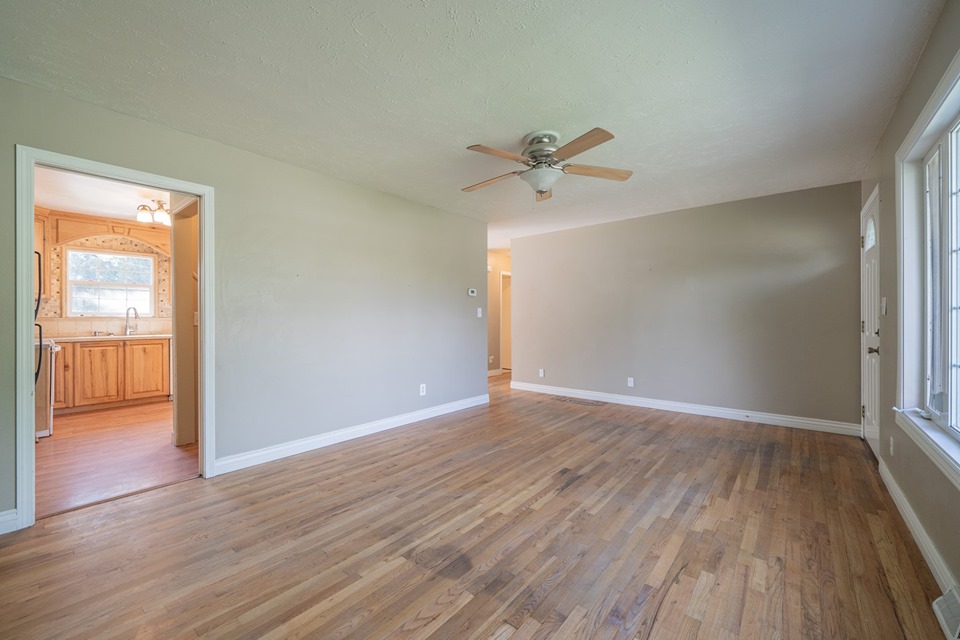

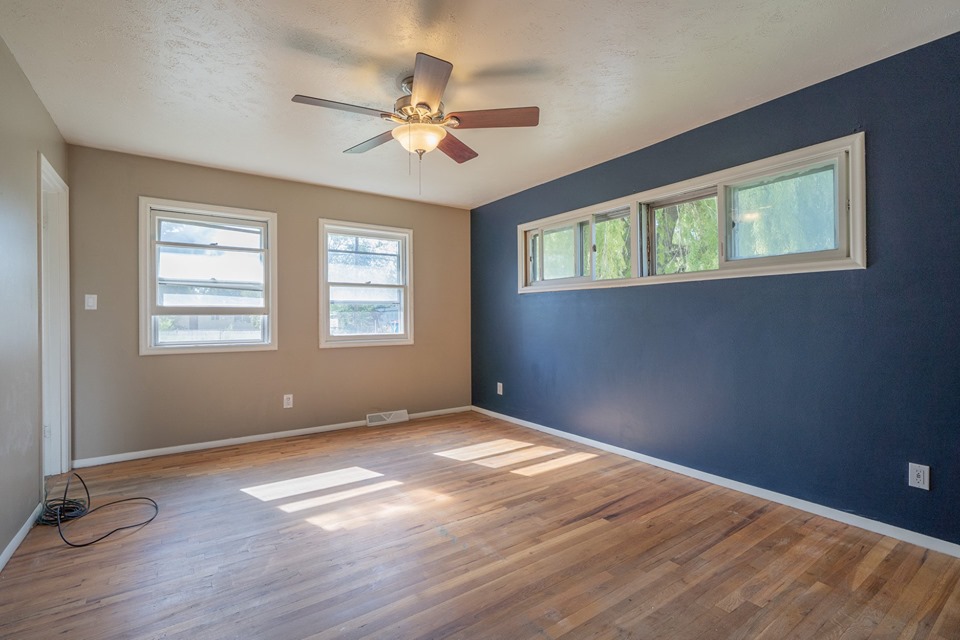


What happens next is a timeline that can greatly fluctuate depending on a lot of different factors. Caleb Fullmer, who has been Chris and Julia’s realtor and ours, outlined a standard sequence of events you can expect when buying your first home:

A couple more things:
- We had to put down $6,240. Our $1,000 earnest money check went towards our down payment. So at closing we had to bring a cashiers check for. $5,240.
- Our closing costs came to around $2,000.
- Your realtor recommends the inspector, but you have to call. Caleb always worked with the same guy. The inspection cost $400. An inspector is an unbiased third party person who comes in and tells you everything you should know about the house, down to bent prongs in our dishwasher, and if your microwave dish doesn’t turn. He takes pictures of everything and sends you a full detailed report. I met him at the house when he was done, and he walked me through everything. His report is sent to the owners and you, the prospective buyer. You can negotiate any issues you want fixed before you move in. In our case, I opted to be given a check of $1,500 on closing day, from the previous owners, to be able to fix things on our own timeline. The inspector gave me that estimate of what we would need for repairs. Our realtor recommended that we take cash instead of having them fix things because you never know if they’re going to short cut things, rush things, or make sure a quality job is done.
- What happens after inspection is an appraisal. This is what the lender needs to know. They need to protect their investment on the loan. So they don’t want to loan you $200,000 if the appraisal shows $150,000. If the appraisal comes back lower than what all parties thought, a couple things could happen: The seller would have to lower the purchase price to the appraised amount, or the buyer would have to pay the difference in cash.
I also asked Caleb if he would share some of his pearls of wisdom with those of you who have been entertaining the idea of buying your first home. Here’s what he had to say:
1. What is the most common mistake you see first time home buyers make?
“Waiting. Waiting for the perfect time, perfect home, perfect price. I’ve seen a lot of first-time home buyers miss out on great opportunities due to ‘The grass is always greener’ mentality. Now, this doesn’t mean you have to buy the first home you look at. I suggest making a list of the top 5 priorities you’re looking for in a home. Once you find one that checks those boxes, don’t be afraid to jump on it. Because someone else will.”
2. How does one prepare to buy their first home? Financially and in other ways?
“Learn the basics of the community — where should I buy? What areas will give me the best resale value if needed? Understand the buying process and how long it will take. Understand the difference between a home inspection and appraisal. An inspection asks ‘What are the problem areas? How much money is this actually going to cost to fix?’ Is it less or more than expected? I think you will be surprised! A trusted real estate professional should be able to help with these specific questions and more.”
3. What’s your advice for home buyers?
“Buying a home should not be a stressful situation. It should be fun and exciting. Find the right professionals that allow you to enjoy the process. The benefits that come from home ownership not only financially (especially with these low interest rates), but emotionally as well, will make it the best investment you’ll ever make.”
Psst! For anyone in the Southeastern Idaho area, you can get in touch with Caleb Fullmer at Fullmerhomes@gmail.com – he’s the best!
Julia gently warned me that once we became homeowners, all of our money will start going towards the house. Like wanting to spend money on things such as area rugs and bamboo blinds…that we would get hooked on painting and weekend remodel projects. I kinda shrugged it off and told myself “I’m not Julia though! I don’t even know how to do all that stuff.” And looking at us now, just six months in, and I cannot stop tackling the next thing on the list! We’ve done art ledges and remodeled our basement. We’ve already done our fair share of painting, and fixing up the guest room is next on the list, while planting a garden for the first time…and landscaping around our house. I also can’t stop dreaming about what color to paint our kitchen cabinets this summer, and my latest Pinterest search is “front doors.” Ours has got to go!
Buying your first home is an investment, yes, and it feels really serious and grown-up, and it’s work. You don’t get to call a landlord anymore when something is broken. And at the same time, it is so freeing to call a whole house your own. The moment it hit me that we had a house, was the very day I was waiting for David to arrive from his long three-day drive from Mexico. I was in the kitchen, placing fruit in a new bowl and I lit a candle. I lit a candle in a clean, new kitchen. And that’s when it hit me this is our home now.

Andrea Bradley de Ahedo is a stylist and commercial photographer who recently moved to Idaho after living abroad in Monterrey, Mexico to be the Visual Media Producer for Chris Loves Julia. She loves foraging for unique spoons and bowls for her ever-growing prop collection, and shooting flatlays for days. She feels most at home when she is traveling with her husband and toddler son in tow. You can check her out on Instagram at @andiandreastudio.




Thank you for sharing the informative article.
What a great first home! Thank you for writing such an informative and relatable post. I agree with the others comments and would love to see finished projects on your home in the future.
What an adorable house and a helpful, candid post! Now I’m thinking I should move to Idaho — I know it’s beautiful out there! Where I am, middle of Seattle, you do the inspection before you place an offer (so that you can waive it to be more competitive), closings are much faster (14 or 21 days is pretty common, but still some 28-day), and you usually have to put down around 20-25% to be competitive. It’s rough! So interesting to hear how this works in different regions and even other countries. Thanks again for the informative post! I would love to see your projects, since they may be more reflective of the typical person’s experience. Enjoy the new house!
My comment yesterday must have been deleted or something… with 3% down, are you now subject to a PMI? I think that would be helpful information to people reading this. As those can be expensive!
We’re looking into some PMI education for a future blog post!
Congratulations!! Thank you for sharing your process, Andrea. I hope you get to enjoy many years in your home, making it your own!