


It’s been an exciting week in the kitchen with the installation of our lower cabinet frames. Our countertops got templated yesterday and once they are installed, the rest of the cabinets will be placed. So, while I’ve got cabinets on the mind, I thought it would be a good time to break down some cabinet anatomy here on the blog. Hopefully some of you find this helpful if you plan on installing cabinets in the future! The more you know, the easier it is to know what you want, so then you can communicate it! There’s a lot to know about cabinets, but today I thought we would talk about the 3 different cabinet door overlays.
To keep things simple, let’s go over some basic cabinet anatomy.
The box – a bit self-explanatory, but this refers to the box of the cabinet.
The frame – the front part that attaches to the box on the front, although there is a such thing as frameless cabinets
The door or face – the part that opens and closes (you know how it goes)
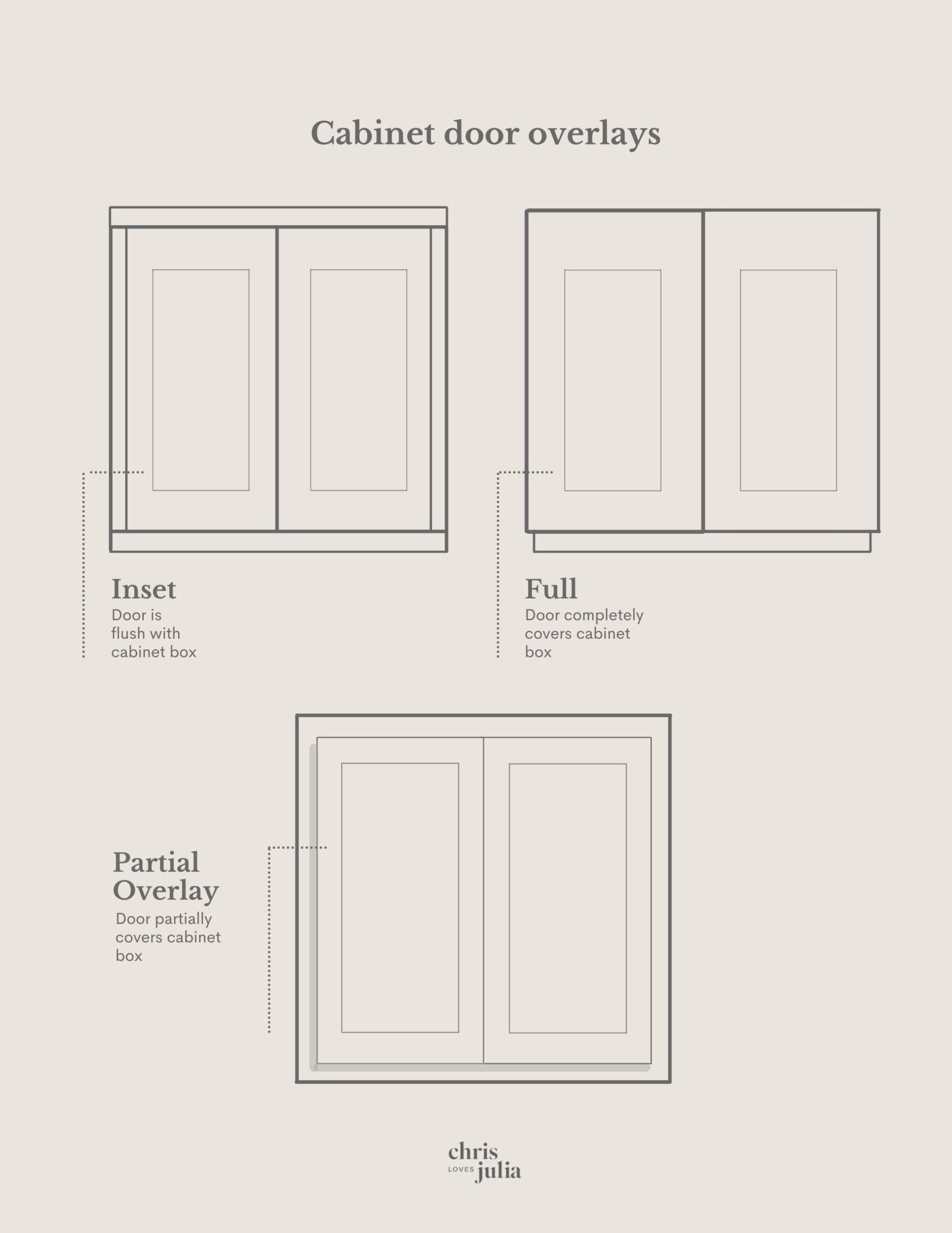
Cabinet door overlay refers to the way the cabinet door connects to the frame. This can also determine which type of door hinge is used!
Let’s get into the three types that you’ve probably seen, but maybe didn’t even realize you were seeing them or that they were different.
1. Inset Cabinets

Source: Jean Stoffer Design

Source: Park & Oak
Inset cabinets sit flush with the frame when the door is closed, rather than resting on top of the frame. They are indeed inset to the frame. This look is classic and sought after because of the clean, precise lines. They are typically the more expensive fit because of the exactness. Our kitchen here will have inset cabinets. The initial bid on the kitchen in the Spring, before we even began the design process, was $65K. We expected this price to go up as we continued to add what was important to us: a drink station, a walk-in pantry with glass-topped doors, and an overflow section with extra dishes and flatware and a spot for cookbooks. The ultimate retail price of our cabinets was just under $80,000. (Full Disclosure: Stoffer did give us a discount for promotion). That price includes the design and working with the Stoffer design team, which has been such an honor. We paid a 10% deposit before the first design consultation (this deposit went toward the final cost of the cabinetry).
2. Overlay Cabinets

Source: Patrick Maziarski

Source: Fullmer Kitchen
Overlay is another commonly seen cabinet type–especially in recent years. They are actually less expensive than inset, but in my opinion still look really clean. Overlay cabinets actually go in front of the entire cabinet box and frame, versus set within. It’s almost like overlay is the dupe of inset. You get a really clean seamless look on the outside, but at more of a budget price.
We’ve used IKEA cabinets loads of times, and actually have a line of cabinet fronts with Semihandmade. Semihandmade has cabinet fronts that can integrate with IKEA SEKTION cabinets, which are all overlay. A lot of people are doing this right now to get the clean look of inset, for less the cost.
3. Partial Overlay
Source: Kelsey Leigh Design Co.

Source: Our Modern Cottage Kitchen
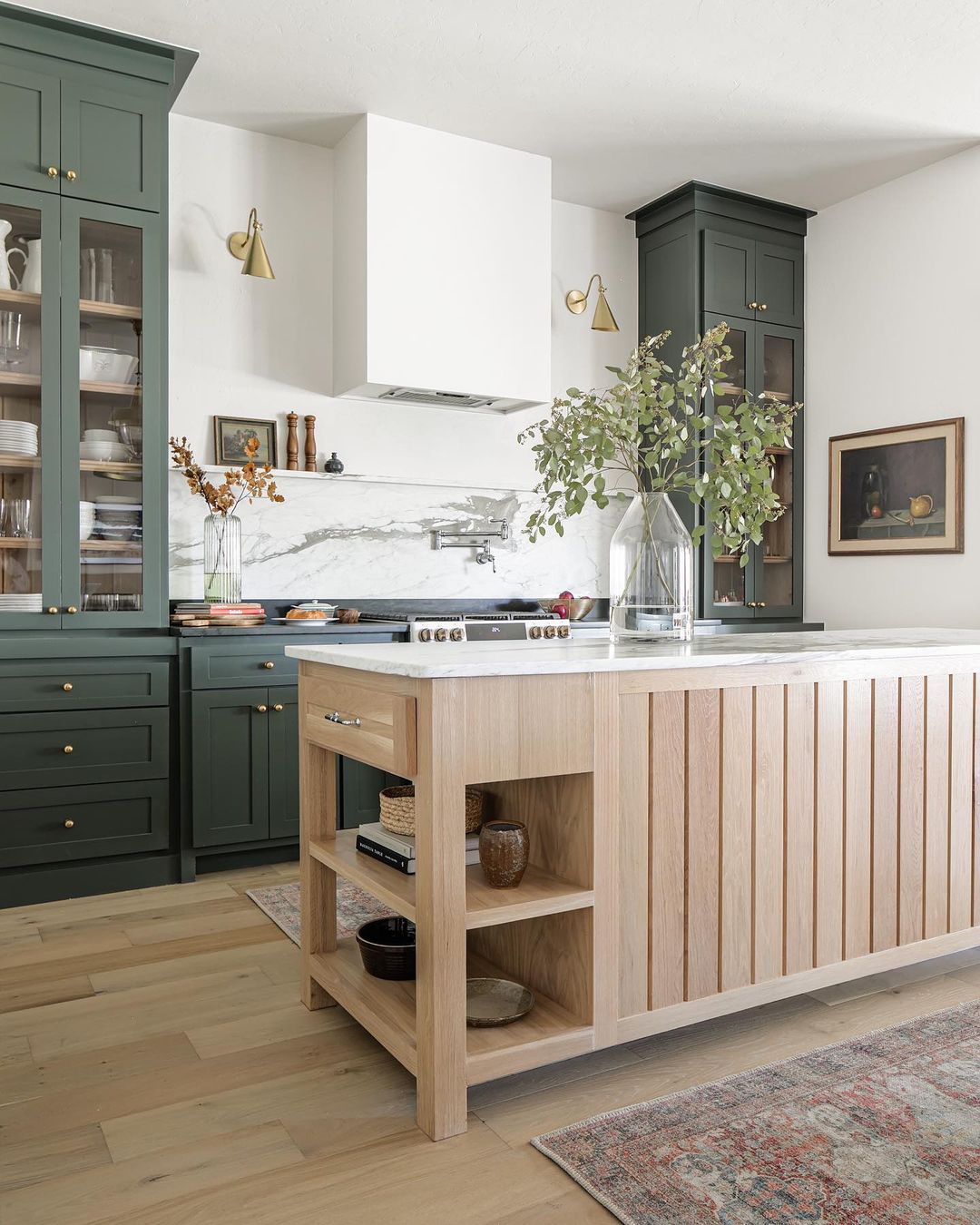
Partial overlay is what you will especially see in older homes. Similar to full overlay, partial overlay cabinets are attached in front of the frame. The difference is you can still see the frame that it’s attached to. It’s the least expensive overlay type, because less material is used, and these don’t require as much precision as full overlay or inset cabinets do. In our modern cottage house, we did a phase 1 renovation for under $1,000. Painting the existing cabinets and upgrading the hardware gave us a beautiful kitchen that served us well, and I would recommend anyone do that if they’re wanting upgrade the look of their kitchen with a smaller budget.
We made a graphic to demonstrate the differences between these three types! Pin it and save it to reference to later! Which type do you have in your kitchen??






I love these educational posts! Thank you! :)
We live in an “older home” as in extremely old (built in 1900!)
The kitchen still has the original cabinets in the Butler’s Pantry section, and they’re inset. We love them so much, and are definitely planning to replace all our other cabinets to match in the eventual kitchen remodel!
I love the clean look, and I think I would choose full overlay whenever I had the choice. In my experience, the edges of the frame get a little dinged up from moving pots, toasters, etc in and out of the cupboards so I want that hidden when the doors are closed. Don’t think I would ever choose inset for that reason.
You mentioned the initial bid was 65k, and then that the price of the cabinets was ultimately 80k – so is the 80k just for the cabinets? Or is that what the kitchen price overall increased to?
This is for cabinets + design.
Personally, for me, inset is worth the cost. EVEN if foundation shifts. I would rather have the imperfection of inset with moving soil every day of the week! The look is classic no matter what, in my opinion. We live in northern Minnesota, so our inset cabinets (8 years old) shift with the seasons. Our cabinet company strongly recommended not to do inset bc of seasons in MN, but our builder was a great advocate. He knew the look I wanted and knew that full just wouldn’t achieve the look I wanted. So, yes, you do have to be mindful that inset may shift. This may drive you crazy, or it may just be the icing on the cake. :)