


This post is sponsored by Lowe’s
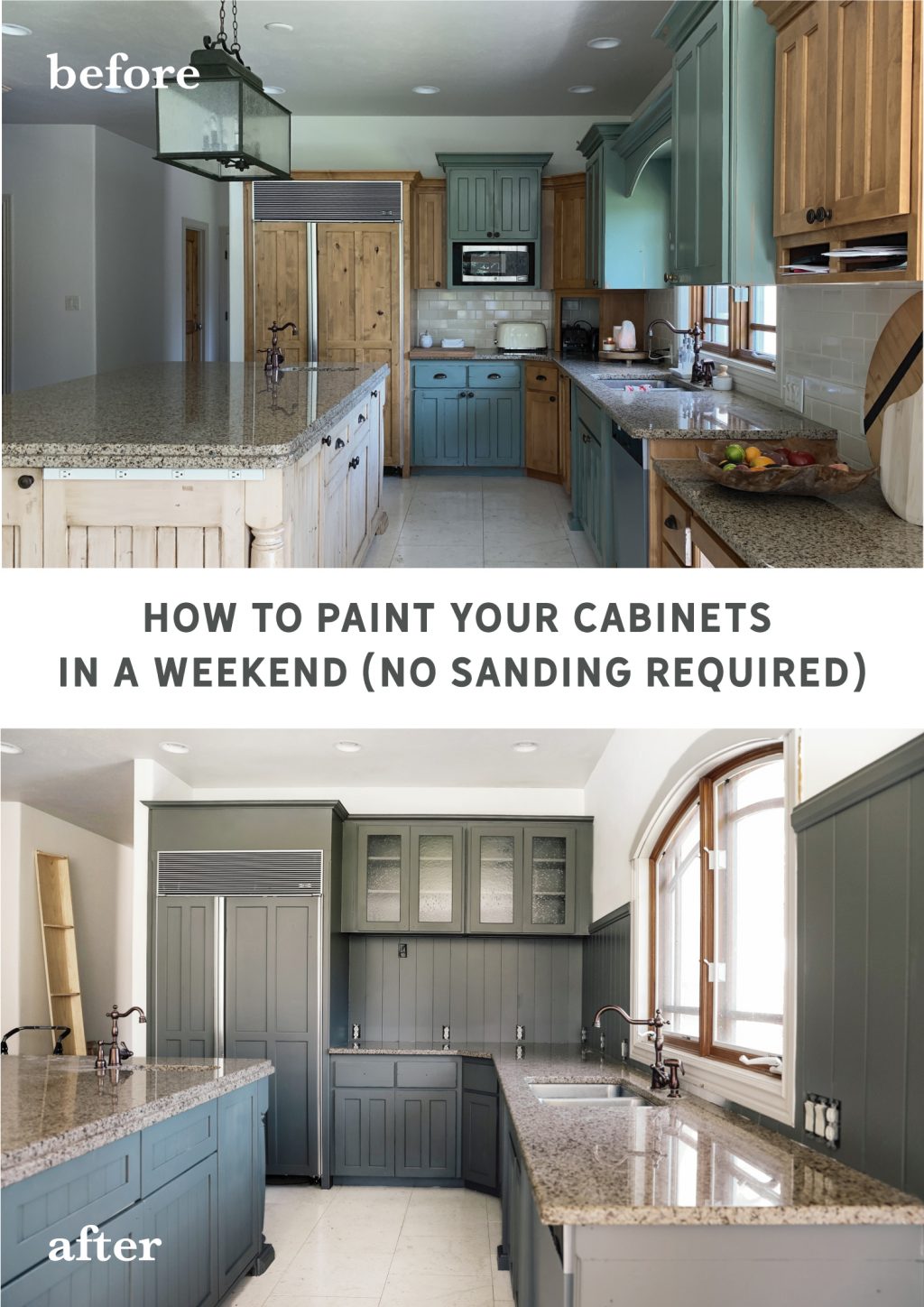
Our week-long phase 1 kitchen refresh is all but done now. The most dramatic change besides rearranging the cabinets (did you even know you could do that?) was painting the cabinets this past weekend. Everyone knows how transformative paint can be, but one of my favorite aspects is one hue isn’t going to be more or less expensive than another. This deep green-gray color we chose (Sherwin Williams Thunderous mixed in HGTV Home by Sherwin Williams Infinity Line at Lowe’s in a Satin finish) is really rich, unified our kitchen added a lot of depth and made everything look a lot more intentional (and even more expensive) for very little money (we also added a bunch of this shiplap vertically as our backsplash and wooooooow! It’s a really amazing product that actually comes pre-painted white, but we painted ours the same green as our cabinets. Back to that…

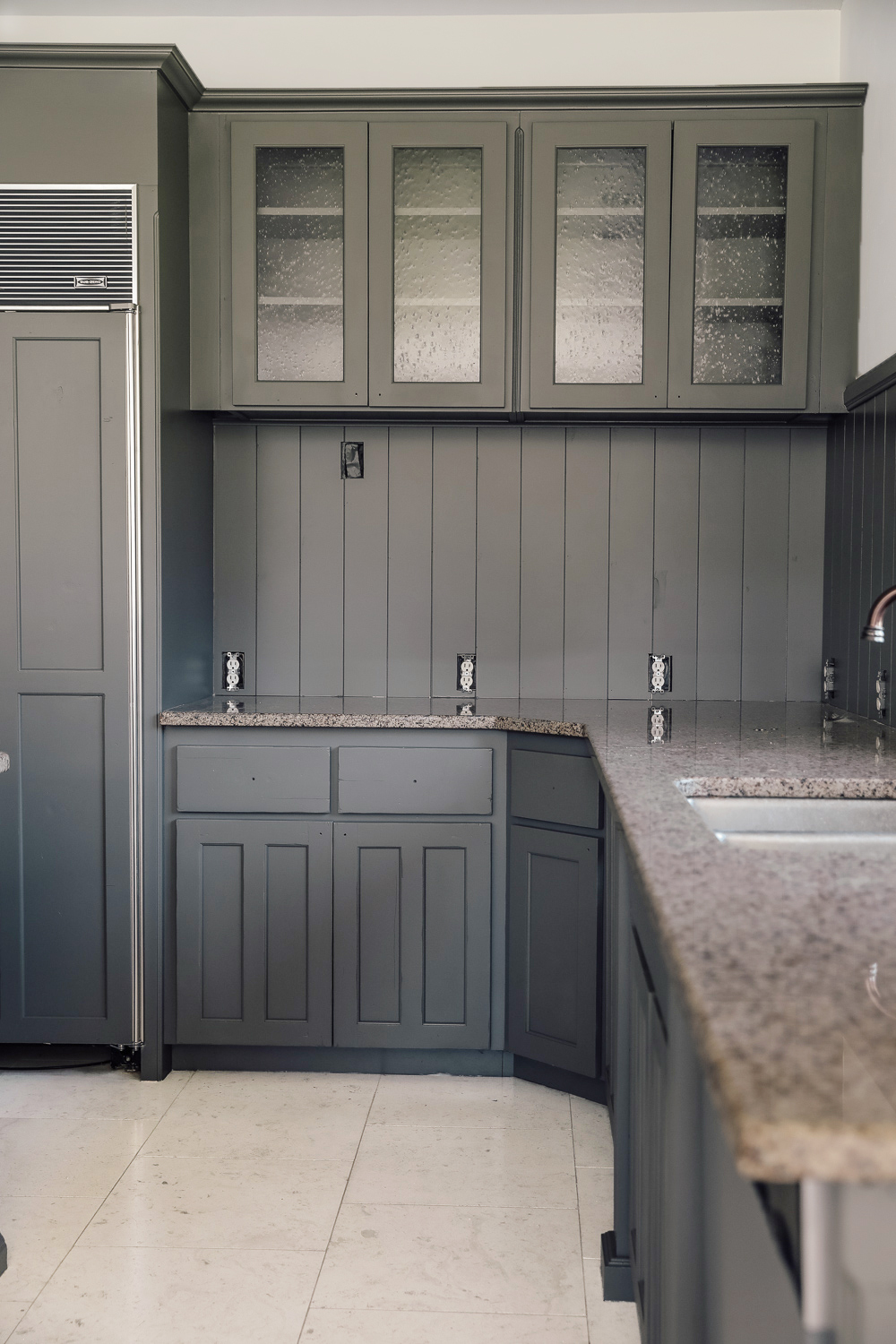
Painting cabinets sounds really daunting, but this is our 4th time doing it and we’re pretty confident we came up with a system that anyone can do. We even had my niece and nephew (both 17) to help us and they nailed it! Whether you’re planning to eventually swap out your cabinets or they’re going to be there for the long haul, this tutorial is for you. And there’s a few time-saving (and sanity saving) tricks we can happily pass on! It’s even the perfect weekend project if you time it right.
Shopping List–Here’s what you need to paint your cabinets!
Paint: We used HGTV Home by Sherwin Williams’ Infinity line in a Satin Finish available exclusively at Lowe’s. It’s an advanced hiding paint and primer and promises a one-coat perfection (we did two just because ), flawless finish and lifetime protection. It’s the creme de la creme. Lowe’s also carries an enamel paint specifically made for cabinets that has that dries super hard, but it only comes in a semi-gloss finish. Since we were trying to minimize some of the antiquing done to our cabinetry, we were happy to go with a lower sheen (Tip: the higher the sheen, the more imperfections will shine through, so if you have textured walls; or erm, cabinets, a lower sheen will minimize that!). The good news is that our paint dried hard with no tackiness at all–so far, so good!
Primer: No sanding required, but don’t skimp on the primer (even if the paint boasts it has a built in one). This is what is going to make the paint on your cabinets last! Also, primer is significantly cheaper than paint, so a coat of primer will actually help extend your paint coverage. We really love Zinsser Bulls Eye 1-2-3 Interior/Exterior Multi-purpose Water-based Wall and Ceiling Primer. It’s designed for all surfaces (interior/exterior drywall, concrete, wood, non-galvanized metal), dries quickly and my favorite–adheres to glossy surfaces without sanding. Tip: If you’re going for a dark paint color like we did, the paint counter will tint your primer dark for you for free! It definitely cuts down on top coats.
Liquid Deglosser: No need to sand your cabinets and make a huge mess when you use this. We’ve tried a couple different brands and really prefer this Jasco Easy Liquid Sander Deglosser. It works on paint, varnish, enamel, lacquer, polyurethane, and stain–you name it. We’ve used it on cabinets, wood moldings and doors with great success.
Paint Applicator: You have options here. You can brush/roll by hand or you can spray. Spraying will give you the smoothest finish by far, which will help extend the life of your paint job, but it will require a bit more of an investment up front. Whether you go the paint sprayer or brush route–here’s what we’d recommend.
- If you’re going to brush/roll: Only brush the inset edges and do that first. I love this Blue Hawk short-handled brush. It’s comfortable and easy to control. But the real MVP is this Whizzlock mini foam roller. It rolls on an even, smooth finish.
- If you want to use a paint sprayer: We’ve tried so many paint sprayers (two for this job alone) just because we feel like testing and providing feedback is a part of our job. This Graco Magnum Painter Plus Electric Stationary Airless Paint Sprayer is the best of the best. I was using a smaller paint sprayer to paint the cabinet fronts and it was taking about 30 minutes for each coat and then Chris painted our entire kitchen in, literally (literally!) 12 minutes with this paint sprayer. There’s no watering down or thinning the paint. It sucks it right up from the gallon so there’s not a ton of mess. No air compressor needed and it connects to a hose for fast and easy clean-up. This thing is tops. Couldn’t recommend it enough.
- Of course the downside to using a paint sprayer is there is a LOT of taping off involved. I swear it took us 6 hours to tape everything off that we didn’t want sprayed in our kitchen. But! it’s always worth it when the actual painting takes less than 30 minutes total. (Plus, it’s fun). If you’re using a paint sprayer, add painter’s tape and plastic and canvas drop cloths to you list to cover everything and some builder’s paper for the floors and countertops!
Plastic Wood (optional): This was one extra product that we used to help fill heavy knots (the kind that have holes in them) and old hardware holes we weren’t going to use again. It’s the consistency of peanut butter and you’ll apply it with a spackle knife. It dries really hard and then grab a sanding block (I promise the only time you’ll touch one and it’s only if you NEED to) and sand off the excess. Also, I’ll save you some confusion–it’s supposed to be stored upside down so the label is placed that way.
Okay, okay–so what exactly is the process?
HOW TO PAINT YOUR CABINETS IN A WEEKEND WITHOUT SANDING THEM

- Remove all cabinet doors. Tip: A piece of painter’s tape with a number on it that matches a piece of tape with the same number on the back of the corresponding door will save you a lot of headache when you’re done.
- Decide if you’re going to paint the backs of the cabinet doors. We chose not to for our base cabinets because they weren’t painted on the back originally, but we did for our uppers because they will be opened a lot more it feels like. If you’re going to paint the backs of your cabinet doors–paint that side first! Place all cabinet doors up off the ground so you can easily reach the sides. We used Dixie cups to prop ours up and it was inexpensive and effective.
- Time to Degloss! You can just pour the liquid deglosser in a bucket and go to town with a sponge or rag. There’s no need to rinse, there’s virtually no odor. It also degreases so I kind of just combine the cleaning/deglossing step here. We used this on both the cabinet doors and boxes. I would recommend gloves and a mask.
- If you’ve got any knots or old holes you don’t want anymore, now’s the time to fill them with the Plastic Wood. Once dry, sand off the excess and remove any debris with a microfiber cloth.

- Primer time! I see a lot of people skipping this step and I kind of feel like it’s the most important one. During this project I got a lot of paint and primer on my hands and guess what stayed through multiple showers and hand-washings–the primer! It’s the glue. A good primer trumps it all. We started with our cabinet doors and then primed the inside of the kitchen and by the time we were done with the the doors were ready to get the first coat of paint. The Zinsser primer we love is ready to paint over in about 30 minutes!

- Painting. This is the finish line, but don’t rush it. If you are using a paint sprayer, keep it moving and just plan on doing 2 coats (no matter what the can says). If you choose to paint the inside of your cabinet doors, do two coats (our can says to allow 2 hours between each one, but we only waited about an hour). But! Before you flip the doors over, I’d wait overnight. It would be a complete shame to ruin your paint job at the finish line.In the morning, flip it over and do two coats on the front, 1-2 hours apart and then let it sit at least 24 hours before reattaching the doors to the cabinet boxes. I recommend doing the fronts after the backs because that extra curing time will ensure there’s no imperfections on the fronts.We painted the cabinet boxes the same day as the primer, so there was 48 hours of drying time before the doors and boxes were reunited. No stickiness or issues like that. Follow the instructions on the can for full curing, but for the INFINITY paint we used, it mentions to wait 14 days before washing the coating. So although it feels dry and hard–it won’t be fully cured for 2 weeks.
- You’re done! Reattach the doors and pop on some fresh hardware to really drive the new look home. We’re using these gorgeous and inexpensive brass knobs (the online pictures don’t do them justice) that are really gonna pop off the dark cabinets.


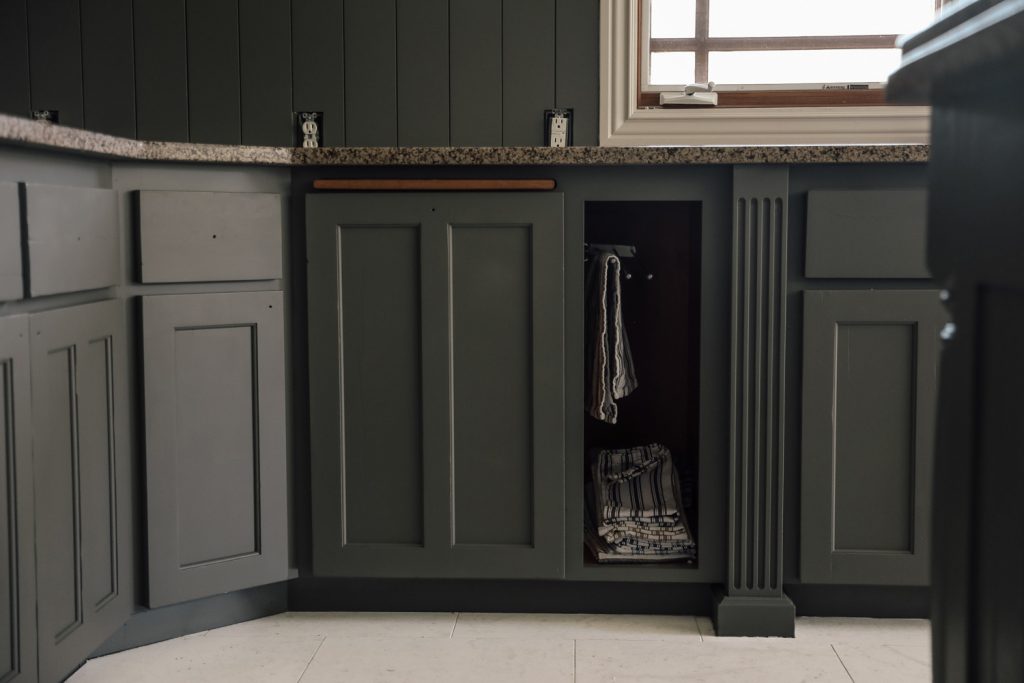
We hope this empowers you to take on the task of painting your cabinets! It’s so transformative.

The color we chose is the definition of a chameleon color. Sometimes it’s sage-y. Sometimes it’s charcoal. Other times it leans blue. We love how it changes throughout the day. Our to-do list is not quite finished, we added a few shelves yesterday that still need paint and I’m determined to paint the wood window trim, along with bringing back in all of our plates and styling this kitchen! Can’t wait to show you the afters–I think with all the accessories in it and hardware–it’s going to look completely different than even these photos!!


I’m glad you emphasized that even if a paint says it has a primer in it, that you should still use a primer. I made the mistake of not using it one time and ended up having to repaint all of my cabinets within a year. I love the color you chose and love the shiplap!
With painters with 10+ yeas of experience, you are getting quality work. I get this 100%, thank you for educating us as homeowners
Thank you for educating us. It’s all useful to all homeowners. Nobody wants a dull cabinet, so this is interesting.
Thank you for the blog.
What is the name of the cable color?