


Last week we met with our contractors to decide once and for all what siding we were going for on our house and my goodness, there were a lot of decisions. The original design plan called for James Hardie Aspyre siding but our contractors encouraged us to look into LP SmartSide. Normally, I would 100% just go for what the designer suggested (and I was more familiar with the James Hardie brand), but because our contractors are local, they had more experience installing both in our weather conditions and said that the SmartSide would last longer in cold, dry Idaho.
I still went in to a deep dive researching the pros and cons (this article came in handy!) and came to the conclusion: They are both incredible products.


James Hardie fiber cement advantages
- Many styles from which to choose
- Resists hail damage
- Withstands winds up to 130 mph
- Matching trim and soffit available with all siding products
- 30-year warranty
- Better curb appeal than vinyl siding
- Noticeably different look and texture than other brands
- Easy to wash
- Durable
- No shrinking
- Warp resistant
- Low maintenance
- Good fit for weather typical of the Midwest
- Authentic wood look without the hassles of real wood
- Excellent seal
- Up to five times thicker than vinyl
- ASTM-rated for fire protection due to the fiber cement material
James Hardie fiber cement disadvantages
- Upfront cost can be an issue for those on a tight budget
- Material is heavier than other types, making installation more labor intensive
- Installation takes longer than other material types
- It will crack if not properly hauled and installed
- Newly constructed homes that settle could result in cracked siding
- Requires installation professionals with experience working with this material
- It’s not the “greenest” material, which can be an issue for those who are environmentally conscious
LP SmartSide advantages
- Aesthetics: LP SmartSide siding can be made to feature the deep cedar grain texture.
- Protection: The patented methods used to manufacture the siding prevents it from being damaged by termites.
- Durable: Thanks to the zinc borate, binders and resins used in manufacturing the siding, it’s incredibly resistant to moisture, making it more durable than other siding products on the market.
- Green: Despite the use of resins and binders (which are low-emitting, safe resins), the main ingredient is wood – a renewable source material. Furthermore, the company uses SFI certified forest management and fiber sourcing systems.
- Warranty: The five-year labor and 50-year transferable limited warranty exceeds the warranty on most other siding products in the market.
- Reduced waste on the job site.
- Comes in long lengths, which reduces the number of pieces required.
LP SmartSide disadvantages
- While the warranty is 50 years, it is prorated at year six, which means coverage drops by 2.2 percent each year through the end of the warranty
- The coating is usually applied by a finisher or applier instead of the manufacturer, which means it can flake off if not done properly
- Installers must prime and paint the edges before installing
- The presence of organic material in the siding mean it can burn
- In regions where termite damage is common, the warranty might not cover that type of damage
I called on my friend, Kim from Yellow Brick Home, who recently re-sided their two-flat to see if she had any insight and she said she just asked Daniel from Manhattan Nest the same thing–the verdict: Go with SmartSide. The installation will be more affordable for us since it’s lighter and what our contractors recommend.
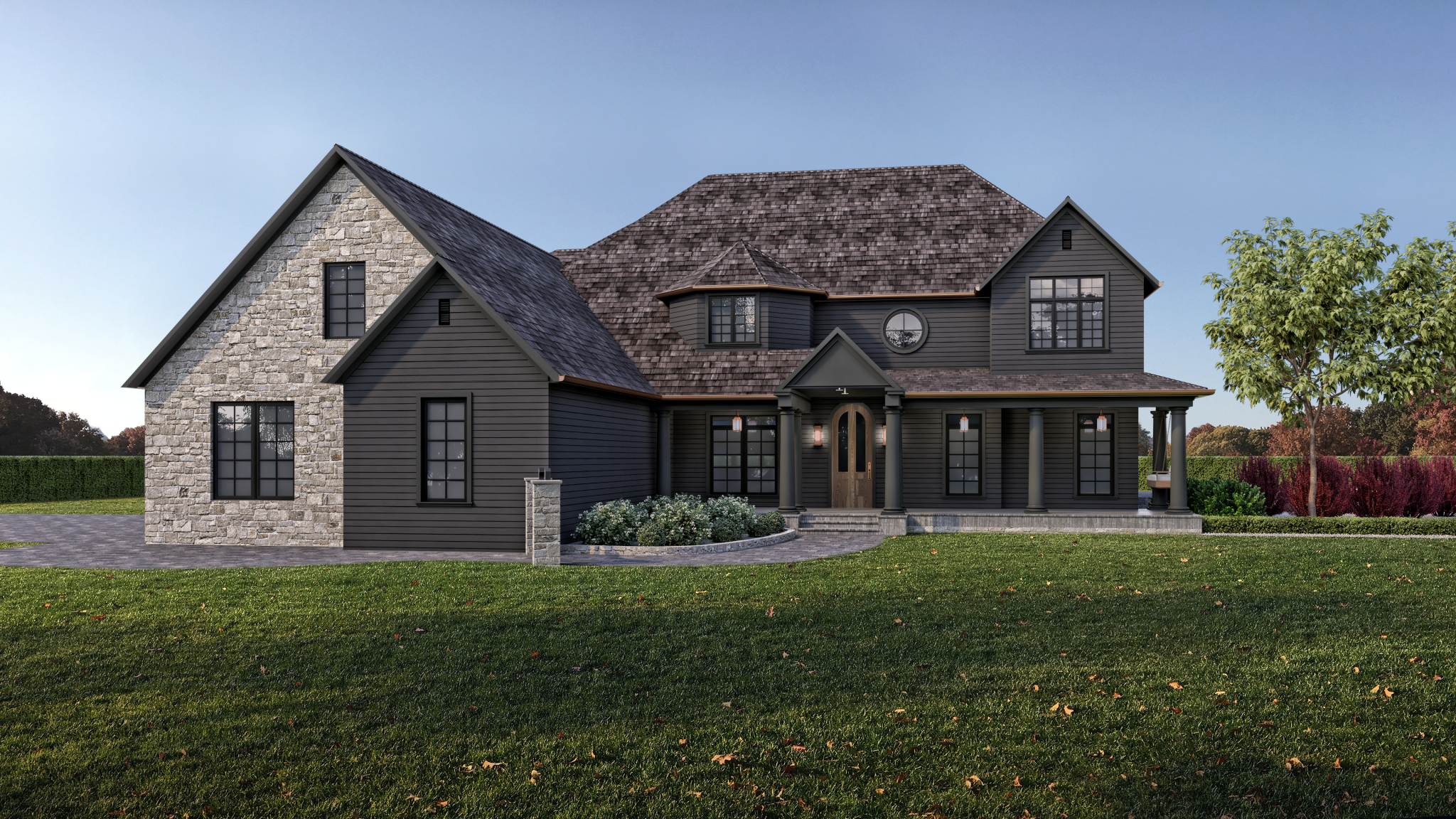
The next choice? The width of the siding. Our contractor assumed we’d want 12″ siding with the size of our house, but in my mind, it was a lot thinner. And then I referenced the design and it was a lot thinner, too.

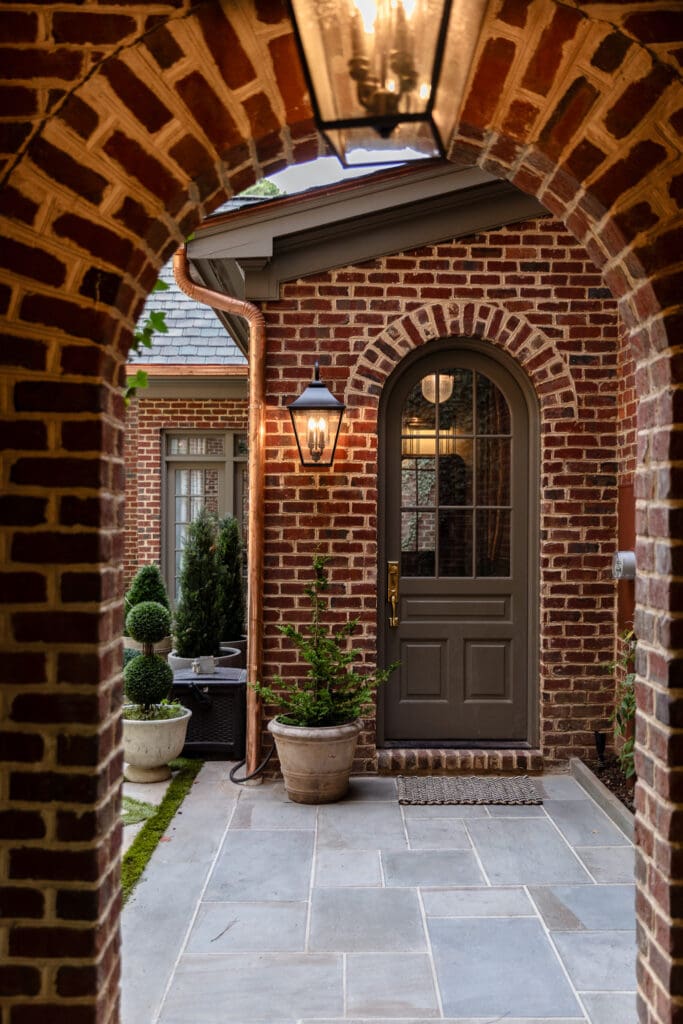
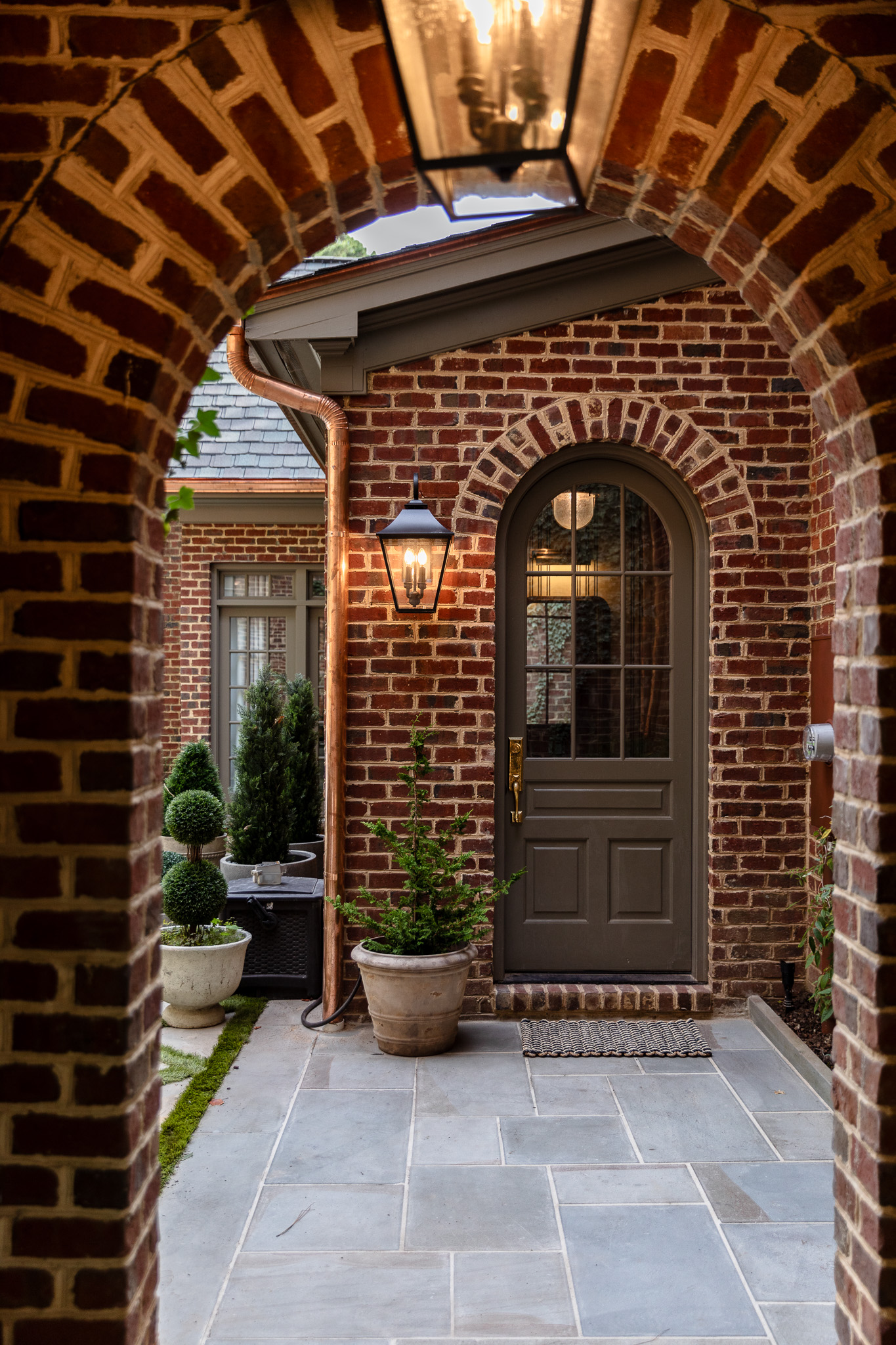
And then I referenced my inspiration photos:


Apparently I like thin, dark siding. Haha! The SmartSide comes in 12″, 8″ and 6″ thickness (each will overlap 1″ so it will really look like 11, 7 and 5). I’m leaning toward the 6″!
The last decision we need to make is cedar grain or smooth.

My gut is telling me smooth, but would it look extra cottage-y in the cedar?? Help!



I absolutely LOVE it. I really would love to know the paint color and the name of the stone (and color)that you used. We are building a new home and we are trying to find the perfect stone/ paint combination.
Thank you!
So did you end up going with the smooth? And what size did you end up selecting?
Smooth LP Smart side with a 4″ reveal (but it’s actually about 5.25″)
If you go with the combo of stone and siding I’d stay the smooth for contrast. I’d love to see it all in siding – like ALL of you inspiration photos – and in that case I’d go with the cedar texture 100%. More cottage-y too.
Cedar!!!!
Loving the look of the thin boards! My vote is smooth, just not a fan of “fake” wood texture.