


The painting questions have been rolling in since we revealed our painted bedroom! When do you spray, vs roll? When do you hire out a painting job? Things like that, so we thought we could maybe address it all here as a reference! Also included are our go-to painting products we’ve been using for years!
Rolling, vs. brushing, vs. spraying
Generally we opt for spraying vs. rolling when there’s added trim to the wall, whether it’s planking, wainscoting, beadboard, or box trim. Spraying gives you a smoother coat, and getting full coverage with a brush won’t ever compare. This is the biggest reason why our bedroom was sprayed, because of the added beadboard on the ceiling, and box trim on all the walls.
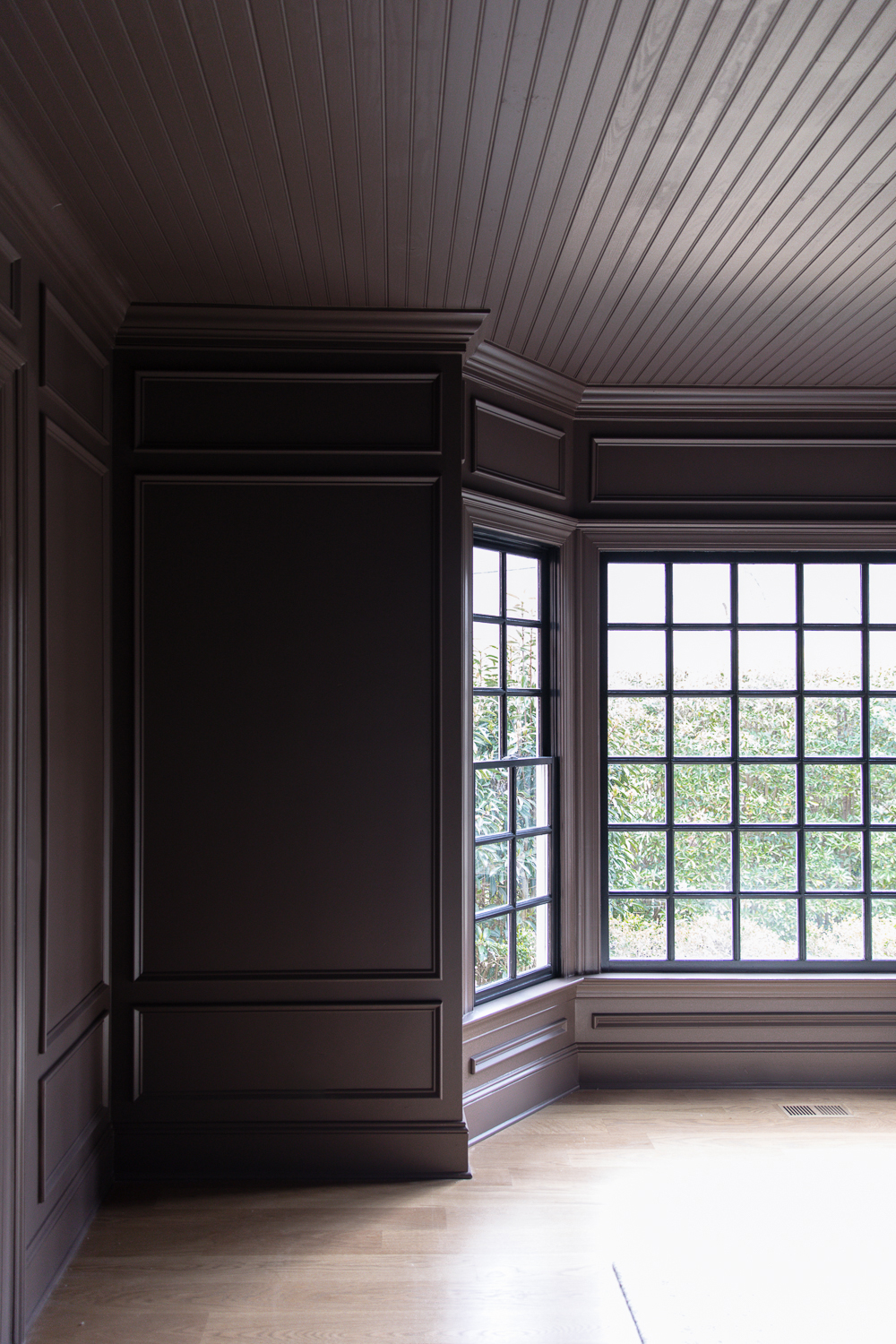
The downside of spraying (and the reason we don’t do it every time) is that there’s a lot of prep work involved! There can be a lot of overspray, so you have to tape and cover everything you don’t want to risk getting painted. Prepping can take the most time, but once you’re set, then spraying is a breeze. For the study, we taped off the floor and ceiling, knowing that the middle section would get covered with wallpaper.

Sherwin-Williams Sheraton Sage
Another great time to spray is when the ceiling and crown is getting painted along with the walls!
For a room like Greta’s, where there’s no wall treatment, and only the 4 walls are getting painted, it was easier to roll. Having to tape off and cover the ceiling, crown, baseboards, and windows just to spray would have been taken more time than actually rolling.
Brushing typically goes hand-in-hand with rolling. We use a brush to cut in around the edges, and then roll the rest. If we were painting over trim, we would use a brush for that as well!
SEE HOW WE RANKED ALL THE PAINT SPRAYERS WE USE HERE.
What sheen do you use?
Most paint brands have about 5 different sheens which is basically just how shiny your paint is. It ranges from flat (matte), eggshell, satin, semi-gloss, and gloss (or high-gloss). We typically use eggshell on our walls, but note: if your walls or ceilings have a texture–the higher the shine, the more details you see, so you may want to opt for a more lower sheen like flat or eggshell to minimize imperfections, rather than highlight them. For bedrooms, I actually prefer a matte or flat finish because I think they are calming, especially if you’re going to do a darker color. If it’s a lighter color, I might bump it up to eggshell. Farrow & Ball, actually has their own paint sheens. Modern emulsion is a very velvety, matte finish that’s wipeable that I actually prefer for walls and ceilings. (This is what we used in our bedroom).
Some people don’t like to use flat or eggshell on their walls because it can be trickier to wipe. Paint has come a long way though and I think this has less to do with the sheen, and more to do with the quality of paint you use! Just something to consider if you’ve been shying away from flat or eggshell sheens.

For trim, baseboards, crown, or maybe a wainscoting, I like them to pop a little bit with a higher sheen! If the walls are flat or matte I would do a satin trim. If the walls are eggshell, I would do semi-gloss! Again, Farrow & Ball plays by their own rules, and my preferred mid-shine sheen is Modern Eggshell, which is what we used for all the window casing, door casing, doors, crown, and baseboards.
How to transition paint from room to room?
This is probably the most frequent question we get when it comes to painting and there’s a few different ways to do it! If you’re painting the trim around a door (like in our bedroom) then the question to ask is what will you see when the door is closed? On the inside of the room, you don’t want any of the outside color showing through. On the outside, you don’t want to be able to see any color from the inside. This typically means that we tape off the door casing, right where the door stops.

When there’s no door involved from room to room, I prefer not to change colors unless there’s trim involved like a cased opening. Have I done it? Yes, I can think of the music room in our previous home, and we just taped off where we wanted the paint to start and stop. Now that I think about it, maybe it’s okay to do that since there’s an archway involved?

Benjamin Moore Fading Twilight
Swivel Chairs | Rug | Sconces | Coffee Table | Vase | Mirror | Fox Art | Portland Art
In our living room, there’s two cased openings that lead to the dining room, and the hallway connecting to the front entry. The pigeon paint color stops where the trim ends, and the inside casing begins. The pictures show it better than I could explain it!

Table | Hanging Lantern | Tree Art | Vase | Peach Stems | Bay Leaf Stems
Now the big question, what will I do if I end up painting the dining room a different color? Would that inside casing become the color of the dining room?? I don’t know if I have a hard rule for this, but rather I would take it on a case to case basis.

As for accent walls, and color blocking, it’s not really my thing. Of course do with that what you will, but I don’t love to start and stop paint within a room, unless there’s trim. For example the wainscoting in the study, and trim, and crown are all painted. I’ve dipped my toes into accent walls years ago, and I think it has come and gone.

What about the windows?
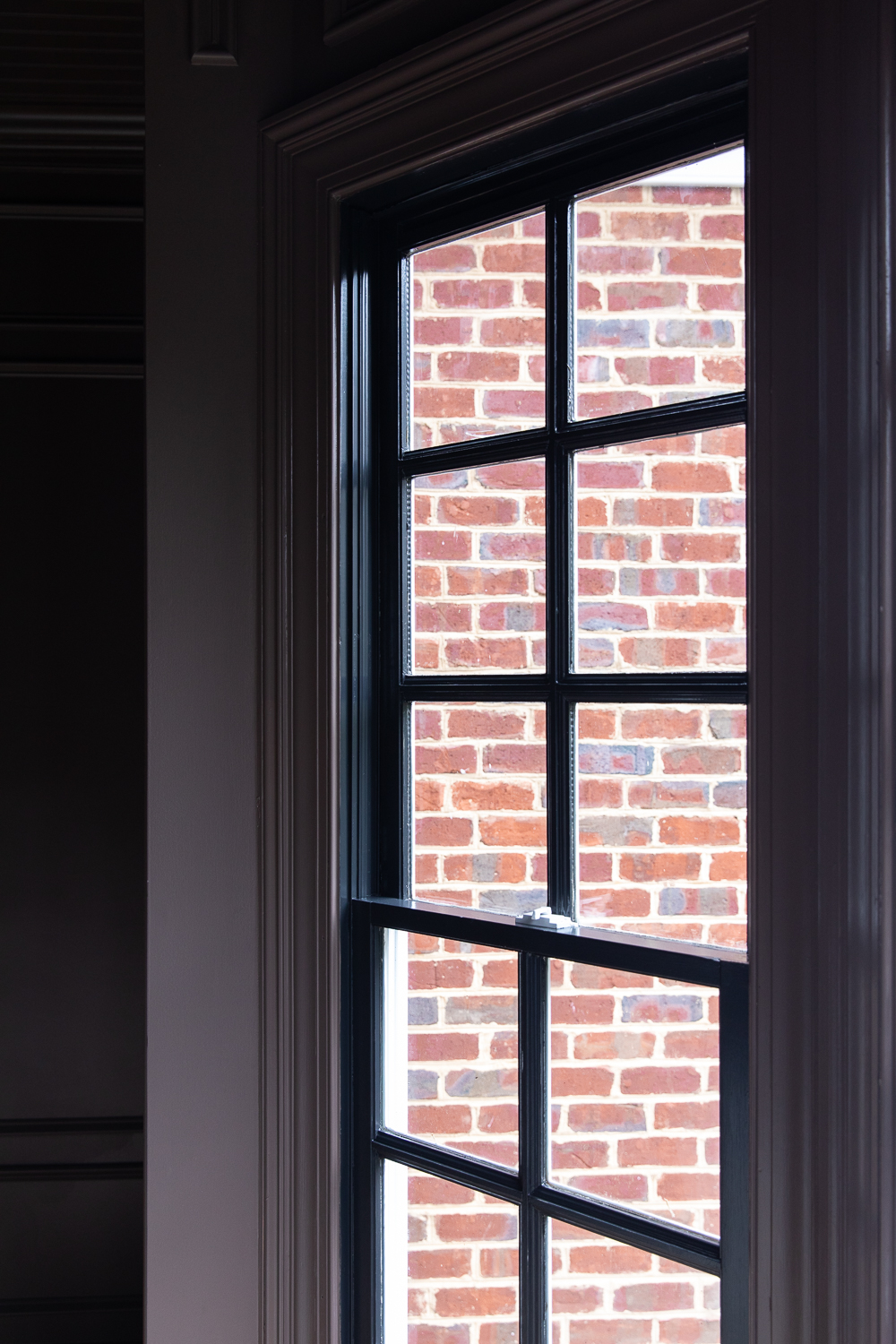
For our bedroom, we actually painted the window sashes to look like we have black windows! Eventually we may need to get our windows replaced (hoping we can get them repaired, but we’re researching–talk about drafty), but this was a great way for me to try out black windows and confirm how much I love them! The stiles and rails (the grid part of the window haha) are wood too, and rather than taping off each square, we used a trusty mask and peel product. All you do is just brush the product onto the window glass (the part you DON’T want painted), let it dry and then paint! Once you’re finished, you peel off the mask, leaving clean painted lines.
Hiring Painters Vs. DIY

One of the first painting jobs we hired out was in Faye’s princess room in our last house. There was so much trim work involved and by the time install was done, we couldn’t imagine painting it. We haven’t hired out every room since, but we saw the value of hiring it out more.
Generally we hire after a big trim install, if there’s tall ceilings involved, or if there’s multiple sheens or multiple colors. So basically any paint job that’s a bit more complicated we leave to the hands of professionals. After DIYing every paint job for the last 13 years, I guess I’m okay handing the job over now. Professionals can be so knowledgable when it comes to knowing when to prime, what primer and paint to use, etc. Plus, sometimes they get a discounted rate for purchasing paint.
So how much does hiring it out cost? Our room is 14’x17′ (238 sq ft) but the square footage of all the walls and ceiling is actually 900 sq ft., which is how our painters charge. Prepping, filling nails holes, and spraying our bedroom cost $2,600.
We actually polled our Instagram audience to find out what other people are paying for painters! The answers were all over the map because not every painter charges the same. Some charge per sq. feet of the room ($5-$10) and some charge per sq. feet of the painted surfaces ($1). They could charge per hour ranging from $20-$70 an hour. Another common response was just a flat rate per room, ranging from $300-$800. My question is, what if it’s a bigger room?? Other answers included:
$14k for 1480 sq. ft
$4k for 1500 sq. ft
$25k for 5000 sq. ft
$50k for 5000 sq. ft
$7400 for 5600 sq. ft (including doors, trim, ceiling, walls, garage, and front exterior)
$1000 per room no matter the size (I suppose it all evens out?)
I think if you’re wanting to hire out, maybe check out our how do you find a contractor post, but I would recommend getting a few different quotes!
Our go-to painting supplies
For any painting job that we do ourselves, here’s all of our tried and true painting supplies we’ve been using for years! Can’t wait to figure out what we’re painting next!

1. Purdy 2 1/2 in Angle Trim Brush $14
2. Dust Barrier Zipper Door $35
3. Plastic Drop Cloth $11
4. Extension Pole $16
5. Step Ladder $65
6. Drop Cloth $20
7. Plastic Liner $5
8. Paint Tray $9
9. Mask & Peel $29
10. Handy Paint Cup $2
11. Paint Cup Liners $6
12. Frog Tape $6
13. Paint Rollers $19
14. Graco Ultra Cordless Airless Handheld Paint Sprayer $602
15. Roller Frame $11
16. Graco Magnum 257025 Project Painter Plus Paint Sprayer $231
Shop Favorite Painting Supplies




Hi CLJ! I see two different paint sprayers in your recommended paint supplies. I’m wondering if you have a preference for when to use either. We may be in the market to buy one, but I was wondering if you would recommend one over the other for tall ceilings and a lot of square footage to cover.
I would recommend using the magnum for bigger projects hands down! The cordless is great for smaller projects.
Hi Julia! This is wonderful thank you!
What sheen would you use on doors in your home? Same as trim with a Semi-Gloss or Satin?
Thank you!
Kelsey
I usually like to match the door sheen to the trim sheen, but I can also see myself bumping down to more of an eggshell.
Hi Julia and team! I personally think this is my all time favorite house. It just keeps getting better!
As far as your windows, I am actually currently working on getting a job restoring wood windows, specifically old wood windows. I am so passionate on this subject! Passionate enough that I would suggest looking at Double Hung (double-hung.com) to at least see what they would say. It’s actually a myth that old windows are less efficient than new windows, they just have to be maintained and you can get wood window screens that match the window to add extra efficiency! Anyway, nobody cares but me LOL
Is the Mask & Peel good for exterior windows as well?
I don’t see why not!
So helpful, thank you! I’m curious about how you handle electrical outlets and switches? Do you ever paint them to help them blend in? If so, how do you make sure it holds up?
Normally we paint them, but sometimes, we just swap them out to one that matches the wall color (that’s what we’ll do in our bedroom)